Vegetarian Stuffed Bell Peppers with Rice :
Introduction to Vegetarian Stuffed Bell Peppers with Rice
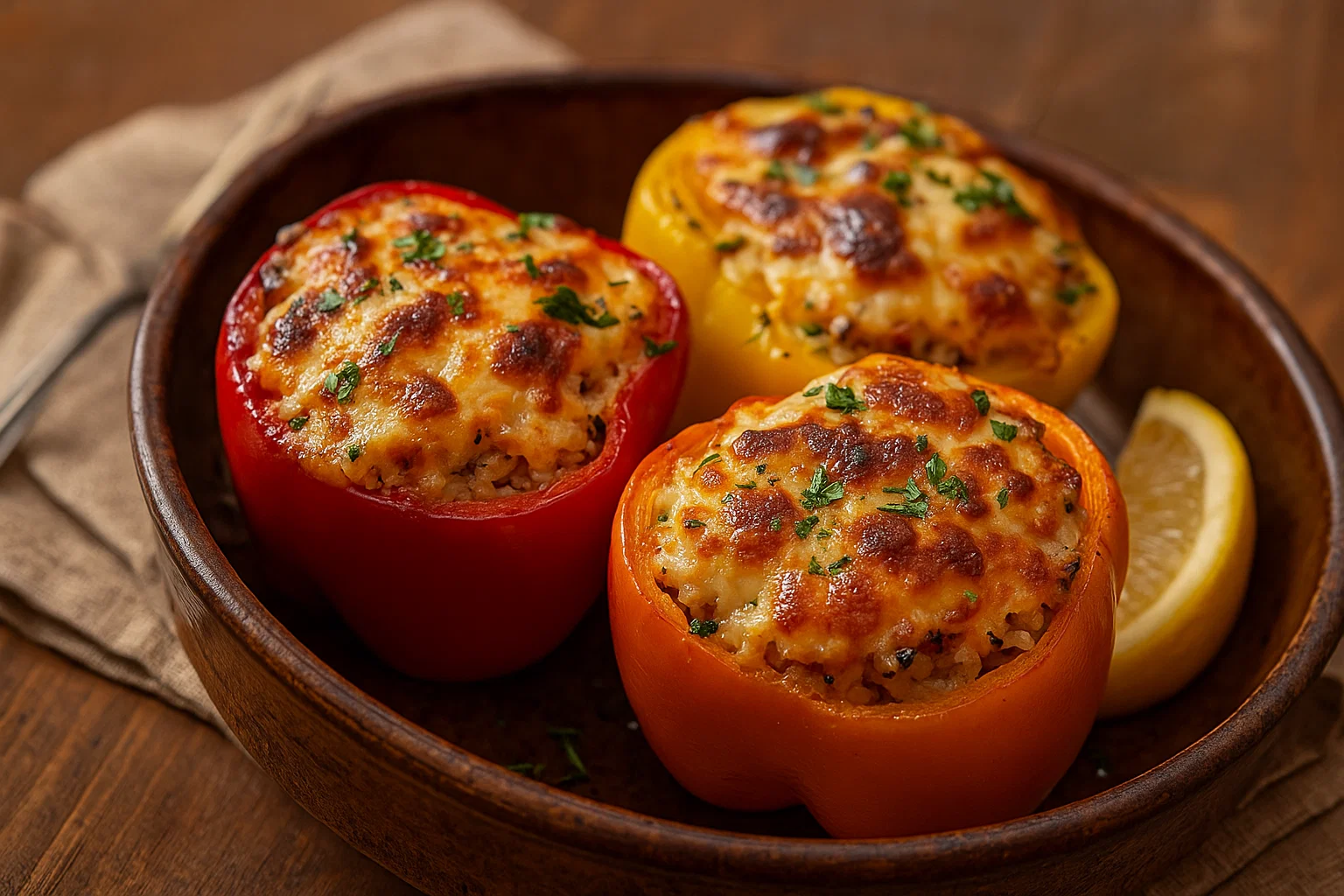
Vegetarian Stuffed Bell Peppers with Rice deliver bright color, satisfying texture, and wholesome nutrition in one joyful dish. In under an hour, you can create a family-friendly meal that balances grains, vegetables, and plant-based protein. This Vegetarian Stuffed Bell Peppers with Rice recipe fits a wide variety of diets, as it can be vegan, gluten-free, and lower in calories when you choose lean ingredients. Moreover, busy parents, students, and working professionals will appreciate how it stores and reheats beautifully, while food lovers and travelers will enjoy the comforting familiarity of stuffed peppers with a new twist.
This rice-stuffed bell peppers recipe uses pantry staples: rice, canned tomatoes, aromatic onions, garlic, herbs, and bell peppers chosen for sweetness and structure. Additionally, you can adapt this Vegetarian Stuffed Bell Peppers with Rice dish to include beans, lentils, or chopped mushrooms for extra protein and umami. The end result looks impressive on the table, yet the process remains straightforward. Whether you cook for two, prep meals for the week, or serve a crowd, these stuffed peppers bring balance: fiber, vitamins, and complex carbohydrates in a single baked parcel. Try this versatile stuffed peppers recipe tonight, and you’ll find why it has become a dependable favorite for diet-conscious home cooks, seniors, newlyweds, and baking enthusiasts who enjoy savory bakes.
Benefits and Advantages of Vegetarian Stuffed Bell Peppers with Rice
Vegetarian Stuffed Bell Peppers with Rice combine convenience, nutrition, and flavor in ways that few weeknight dinners can match. First, they offer excellent meal prep potential. You can assemble the filling in advance, stuff the peppers, and bake them when you want a hot meal. This makes the recipe ideal for busy families and professionals who need efficient, healthy dinners. Secondly, the dish checks many dietary boxes: when made with brown rice and beans, it becomes high in fiber and plant protein; when prepared with gluten-free ingredients the recipe suits those with gluten sensitivities; and when you skip cheese or use a vegan alternative, the dish becomes fully vegan.
Nutritionally, these rice-stuffed peppers provide vitamins A and C from the bell peppers, B vitamins from the rice, and a variety of minerals from vegetables and legumes. Moreover, by using low-sodium canned tomatoes and moderate oil, you can control sodium and fat content for a heart-healthy meal. People watching calories will enjoy portion control—one stuffed pepper equals a balanced serving. Flavor-wise, the contrast between the sweet roasted pepper vessel and the savory herbed rice filling keeps every bite interesting. For students and travelers, each stuffed pepper travels well and reheats easily for satisfying leftovers.
Finally, this recipe stands out because it scales gracefully. You can double the batch for a potluck or halve it for a quick two-person dinner. In short, Vegetarian Stuffed Bell Peppers with Rice combine practicality and taste; they satisfy nutritional goals while staying simple to prepare and pleasing to a broad audience.
Ingredients Overview
Essential Ingredients for Vegetarian Stuffed Bell Peppers with Rice
- 6 large bell peppers (about 2 to 2.5 pounds total), mixed colors preferred — provides sturdy vessels and visual appeal. (Vegan, Gluten-Free)
- 1 cup long-grain white rice, uncooked — cooks quickly and gives a light, fluffy texture. (Substitute: 1 cup brown rice for more fiber) (Vegan, Gluten-Free)
- 2 cups low-sodium vegetable broth or water — to cook the rice and boost flavor. (Vegan, Gluten-Free)
- 1 tablespoon olive oil — for sautéing aromatics. (Low-calorie option: 1 teaspoon vegetable broth or skip) (Vegan, Gluten-Free)
- 1 medium yellow onion, finely chopped (about 1 cup) — adds sweetness and depth. (Vegan, Gluten-Free)
- 3 cloves garlic, minced — for savory aroma. (Vegan, Gluten-Free)
- 1 (14.5 oz) can diced tomatoes, drained slightly — adds moisture and acidity. (Vegan, Gluten-Free)
- 1 cup canned black beans, drained and rinsed — adds plant protein and fiber. (Vegan, Gluten-Free)
- 1 cup frozen corn, thawed — adds sweetness and texture. (Vegan, Gluten-Free)
- 1 teaspoon ground cumin — adds warm, earthy flavor.
- 1 teaspoon smoked paprika — for subtle smokiness.
- 1/2 teaspoon dried oregano — herbal backbone.
- 1/2 teaspoon salt, adjust to taste — controls seasoning.
- 1/4 teaspoon freshly ground black pepper — enhances flavors.
- 1/2 cup fresh cilantro, chopped (optional) — bright finish for filling. (Vegan, Gluten-Free)
- 1/2 cup shredded cheddar or Mexican blend cheese (optional) — for those who want a cheesy crown. (Vegetarian only; omit for vegan)
- 2 tablespoons tomato paste (optional) — deepens tomato notes.
- 2 tablespoons lemon or lime juice — lifts flavors before stuffing. (Vegan, Gluten-Free)
Purpose or benefit of key ingredients:
- Bell peppers serve as natural serving vessels and provide vitamin C.
- Rice acts as the filling base, making the dish more filling and economical.
- Beans or lentils increase protein content, turning the dish into a complete meal.
- Tomatoes and tomato paste add acidity, which balances richness and brings brightness.
- Spices like cumin and smoked paprika add warmth and complexity without extra calories.
Dietary Substitutions to Customize Your Vegetarian Stuffed Bell Peppers with Rice
- Gluten-Free: This recipe uses naturally gluten-free ingredients. Just double-check that your canned tomatoes, broth, and spices are labeled gluten-free if you have intolerance.
- Vegan: Omit cheese or use 1/2 cup vegan shredded cheese. Use olive oil or vegetable broth for sautéing to keep it plant-based. Nutritional yeast also provides savory, cheese-like flavor.
- Low-Calorie: Use 1 teaspoon olive oil or a light spray and increase herbs for flavor. Substitute white rice with cauliflower rice for a lower-calorie, lower-carb option; note that cauliflower rice will require less cooking time and more moisture during mixing.
- Higher Protein: Add 1 cup cooked lentils or swap black beans for 1 cup cooked quinoa for a complete amino acid profile.
- Low-Sodium: Use low-sodium broth and unsalted canned beans; omit added salt and rely on herbs, citrus, and spices to brighten flavors.
- Dairy-Free: Skip cheese or use a dairy-free shredded alternative; add 2 tablespoons of ground almonds or sunflower seeds for a crunchy finish if you miss the texture.
- Whole Grain: Substitute 1 cup brown rice (use 2.5 cups broth and increase cooking time) for more fiber and a chewier texture.
- Nut-Free: This recipe is nut-free by default; if adding crunchy toppings, avoid nuts and use roasted pumpkin seeds instead.
- Quick Version: Use 2 cups cooked rice (leftover or store-bought) and skip the rice-cooking step to speed up assembly. Adjust moisture with a splash of broth or canned tomato juice.
These substitutions keep the core appeal of Vegetarian Stuffed Bell Peppers with Rice while making the dish accessible to a wide range of dietary needs and ingredient availability.
How to Prepare the Perfect Vegetarian Stuffed Bell Peppers with Rice : Step-by-Step Guide
First Step: Preheat and prep. Preheat the oven to 375°F. Meanwhile wash and dry 6 large bell peppers. Slice about 1/4 inch off the tops and remove seeds and membranes with a small spoon, keeping the peppers intact as containers. If a pepper won’t stand upright, slice a thin sliver off the bottom to level it, but be careful not to create a hole. Place the prepared peppers upright in a 9×13-inch baking dish and set aside. This basic prep sets you up for smooth stuffing and even baking.
Second Step: Rinse rice and begin cooking. Rinse 1 cup long-grain white rice in a fine-mesh sieve until water runs clear. In a medium saucepan, combine rinsed rice and 2 cups low-sodium vegetable broth. Bring to a boil, then reduce heat to low, cover, and simmer 15 minutes for white rice or 40-45 minutes for brown rice. Let rice rest covered off heat for 5 minutes, then fluff with a fork. For a quicker route, use 2 cups cooked rice and skip this step. When adapting to dietary needs: choose brown rice for more fiber or cauliflower rice for low calories; adjust cooking times accordingly.
Third Step: Sauté aromatics. While rice cooks, heat 1 tablespoon olive oil in a large skillet over medium heat. Add 1 cup finely chopped onion and sauté until translucent, about 5 minutes. Add 3 cloves minced garlic and cook 1 minute until fragrant. If avoiding oil, sauté in 2 tablespoons vegetable broth instead. Add 2 tablespoons tomato paste and cook 1-2 minutes to deepen flavor. This fragrant base builds the savory profile of the stuffing.
Fourth Step: Build the filling. Stir in drained 1 (14.5 oz) can diced tomatoes, 1 cup drained black beans, 1 cup thawed corn, 1 teaspoon ground cumin, 1 teaspoon smoked paprika, 1/2 teaspoon dried oregano, 1/2 teaspoon salt, and 1/4 teaspoon black pepper. Cook 3-4 minutes to meld ingredients. Then add the cooked and fluffed rice to the skillet. Mix thoroughly until the rice absorbs the tomato juices and spices. Taste and adjust seasoning. Add 2 tablespoons lemon or lime juice and 1/2 cup chopped cilantro if using; these brighten the filling. For extra protein, fold in 1 cup cooked lentils or 1 cup cooked quinoa at this stage.
Fifth Step: Optional cheese and binding. If you prefer a creamier or cheesier filling, stir in 1/2 cup shredded cheddar cheese or a vegan cheese alternative. Use 2 tablespoons of ground flax mixed with 6 tablespoons water as a vegan binder if you want a slightly firmer texture when cooled. For low-fat versions, skip cheese and rely on extra herbs and citrus.
Sixth Step: Stuff the peppers. Spoon the rice mixture into each prepared bell pepper, pressing down gently so each pepper holds as much filling as possible. Fill to the top; you can mound slightly if desired. Place the pepper tops back on as lids if you like visual presentation, or reserve the tops for roasting alongside the peppers. Try to distribute filling evenly for consistent baking.
Seventh Step: Add baking liquid. Pour 1/2 cup vegetable broth into the bottom of the baking dish to create a steamy environment in the oven. This helps the peppers soften without drying out the filling. Cover the dish tightly with foil to trap steam and ensure even cooking. For gluten-free baking ensure foil or cover is safe for your dish.
Eighth Step: Bake. Bake covered for 30 minutes at 375°F. Then remove foil and bake an additional 10-15 minutes until peppers are tender and the tops of the filling begin to brown. If you want a golden cheese crust, add 1/4 cup more shredded cheese on top during the final 10 minutes. For a vegan finish, use plant-based cheese or skip this step. Insert a knife into the pepper to check tenderness; it should slide in easily.
Ninth Step: Rest and garnish. Remove the dish from the oven and let stuffed peppers rest for 5 minutes to set the filling. This short rest helps the contents firm up slightly so they hold their shape. Garnish with extra cilantro, a sprinkle of chopped scallions, or a drizzle of plain yogurt or vegan yogurt for creaminess. For a zesty flare, serve with lime wedges on the side.
Tenth Step: Serve and adapt. Plate one or two stuffed peppers per person depending on appetite. Serve with a simple side salad, steamed greens, or warm flatbread. For meal prep, cool stuffed peppers completely and refrigerate in an airtight container for up to 4 days. To freeze, place cooled peppers on a baking sheet for an hour, then transfer to a freezer-safe container for up to 3 months. Reheat from frozen in a 350°F oven until heated through, about 25-35 minutes. This final step makes the recipe practical for families, students, busy professionals, and anyone who values convenience.
Eleventh Step: Flavor variations and finishing touches. Try stirring in 1/4 cup chopped roasted red peppers or 2 tablespoons chopped olives for Mediterranean notes. For a Mexican twist, add 1 teaspoon chili powder, 1/2 teaspoon cayenne, and top with sliced avocado and salsa. When you want a lighter version, fold in steamed spinach or kale to increase vegetable content without adding many calories. These adaptations keep Vegetarian Stuffed Bell Peppers with Rice exciting and tailored to personal tastes.
Twelfth Step: Presentation tips. For a colorful dinner, alternate pepper colors on a platter and sprinkle with contrasting garnishes such as pomegranate seeds or diced tomatoes. If serving a crowd, bake peppers in batches on a sheet pan and transfer to a large serving dish. These small presentation choices elevate the dish while preserving simplicity.
Thirteenth Step: Safety and final checks. Always check that internal temperature reaches at least 165°F when reheating leftovers to ensure safe consumption. Use oven mitts when handling the hot dish and keep children at a safe distance during serving. With these careful steps, your Vegetarian Stuffed Bell Peppers with Rice will be both delicious and safely prepared.
Mastering Vegetarian Stuffed Bell Peppers with Rice : Advanced Tips and Variations
Elevate your Vegetarian Stuffed Bell Peppers with Rice with a few advanced techniques and inspired variations. First, to deepen flavor, toast the rice lightly in the skillet with the onion and a splash of oil before adding broth. This step imparts a slightly nutty aroma and improves texture. Next, layer flavors by roasting the bell peppers first: place halved peppers cut-side down on a baking sheet at 425°F for 10 minutes, then flip and stuff. Roasting caramelizes sugars and adds complexity.
For texture contrast, mix toasted pine nuts or chopped roasted pepitas into the filling right before stuffing; this adds crunch and healthy fats. If you prefer a creamier interior, fold in 1/4 cup ricotta or blended silken tofu for a vegan creaminess. Additionally, use homemade vegetable broth whenever possible; it intensifies the savory profile without extra sodium.
Variations to try:
- Mediterranean Style: Replace black beans and corn with 1 cup cooked quinoa, 1/2 cup crumbled feta, 1/4 cup chopped Kalamata olives, 1/2 cup diced cucumber on the side, and finish with oregano and lemon zest.
- Mexican-Inspired: Add 1 teaspoon chili powder, 1/2 teaspoon cayenne, 1/2 cup cooked pinto beans, and top with fresh avocado, cilantro, and a squeeze of lime.
- Italian-Style: Use 1 cup cooked farro or arborio rice, 1/2 cup chopped sun-dried tomatoes, 1/4 cup basil, and 1/2 cup shredded mozzarella. Top with marinara sauce before baking.
- Hearty Autumn Option: Stir in 1 cup roasted butternut squash, 1/2 cup chopped walnuts, 1/2 teaspoon smoked paprika, and a dash of maple syrup for a sweet-savory balance.
- Low-Carb Swap: Use riced cauliflower mixed with sautéed mushrooms and onions; add 1/2 cup crumbled goat cheese for richness.
Make-ahead tips: Prepare the filling up to 48 hours in advance and store it in the refrigerator. When ready to serve, stuff and bake as directed. For freezing, assemble stuffed peppers and freeze them unbaked on a sheet pan. Transfer to airtight containers and bake from frozen at 350°F for about 40-50 minutes, covered, then uncovered to brown.
Presentation and serving variations: Serve in shallow bowls with a ladle of warm tomato sauce underneath to keep peppers moist. Alternatively, for a deconstructed plate, spoon the filling atop a bed of wilted greens and use the pepper as an edible garnish.
With these techniques and variations, your Vegetarian Stuffed Bell Peppers with Rice can become a culinary canvas. Experiment confidently and tailor the recipe to dietary needs, regional flavors, and seasonal ingredients.
How to Store Vegetarian Stuffed Bell Peppers with Rice : Best Practices
Refrigeration: Allow stuffed peppers to cool at room temperature for no more than two hours, then transfer to airtight containers. Refrigerated, the peppers will remain safe and flavorful for up to 4 days. Reheat a single pepper in the microwave for 1-2 minutes on high or in a 350°F oven for 12-15 minutes until heated through. For best texture, reheat covered to retain moisture.
Freezing: To freeze, cool stuffed peppers completely. Place them on a parchment-lined baking sheet and freeze until the exterior firms, about 1 hour. Then wrap each pepper tightly in plastic wrap followed by aluminum foil or place in a freezer-safe container to prevent freezer burn. Stored properly, they will keep for up to 3 months. Thaw overnight in the refrigerator before reheating. Alternatively, bake from frozen at 350°F for 40-50 minutes, covered, then uncover for 10 minutes to brown.
Reheating: For even reheating, preheat oven to 350°F. Place peppers in a baking dish with 1/4 cup vegetable broth or tomato sauce to add steam; cover loosely with foil and heat for 20-25 minutes until warm. Remove foil and crisp the top under the broiler for 1-2 minutes if you want a browned finish. For microwave reheating, cover the pepper with a damp paper towel to keep the filling moist and microwave in 45-second increments until piping hot.
Meal prep tips: If preparing multiple servings for weekly meals, store filling and peppers separately. This maintains pepper texture and allows quick assembly before baking. Label containers with preparation and freeze dates to track freshness. Follow these storage strategies to make Vegetarian Stuffed Bell Peppers with Rice a reliable option for weekday dinners, potlucks, and grab-and-go meals.
Nutritional Value of Vegetarian Stuffed Bell Peppers with Rice
Below is an approximate nutrition breakdown per stuffed pepper assuming 6 servings and using the base recipe with white rice, black beans, corn, and a small amount of cheese. Values can vary based on exact ingredients and substitutions. Use this table as a guideline for calories, macronutrients, and key micronutrients when enjoying Vegetarian Stuffed Bell Peppers with Rice.
| Nutrient | Amount per Serving (approx.) |
|---|---|
| Calories | 340 kcal |
| Total Fat | 8 g |
| Saturated Fat | 2.5 g |
| Trans Fat | 0 g |
| Cholesterol | 10 mg (omit cheese for 0 mg) |
| Sodium | 420 mg |
| Total Carbohydrates | 54 g |
| Dietary Fiber | 8 g |
| Sugars | 8 g |
| Protein | 11 g |
| Vitamin A | 120% DV* |
| Vitamin C | 170% DV* |
| Calcium | 10% DV* |
| Iron | 15% DV* |
| Potassium | 520 mg |
*DV = Daily Value based on a 2,000 calorie diet. Percent Daily Values are approximate.
Explanation and notes:
- Calories: The calorie count comes from rice, beans, oil, and optional cheese. Choose brown rice and skip cheese to slightly increase fiber and reduce saturated fat.
- Fat and Saturated Fat: Mostly from olive oil and cheese. Use oil sparingly and swap cheese for vegan alternatives to lower saturated fat.
- Protein: Provided primarily by black beans and rice. For more protein, increase beans or add lentils; using quinoa will also elevate protein content.
- Fiber: Bell peppers, beans, and whole-grain rice contribute to a filling fiber content—useful for digestive health and satiety.
- Vitamins and Minerals: Bell peppers contribute substantial vitamins A and C. Beans and rice add iron and B vitamins. Adding leafy greens increases vitamin K and folate.
- Sodium: Using low-sodium broth and rinsing canned beans helps manage sodium. Adjust salt to taste.
This nutritional overview shows how Vegetarian Stuffed Bell Peppers with Rice can become a nutritious, balanced meal for health-conscious diners, seniors, and anyone managing dietary goals.
FAQs: Frequently Asked Questions About Vegetarian Stuffed Bell Peppers with Rice
Q: Can I make Vegetarian Stuffed Bell Peppers with Rice ahead of time?
A: Yes. You can prepare the filling 1-2 days ahead and refrigerate it. Stuff peppers and bake when ready. For longer storage, assemble and freeze unbaked peppers for up to 3 months.
Q: Can I use brown rice instead of white rice?
A: Absolutely. Brown rice adds fiber and a nuttier flavor. Use 1 cup brown rice with 2.5 cups broth and increase simmer time to about 40-45 minutes. This swap keeps the recipe whole-grain friendly.
Q: What if I do not eat beans?
A: Skip beans and add cooked quinoa, lentils, or chopped mushrooms for texture and protein. You can also mix in roasted vegetables like zucchini or eggplant to bulk up the filling.
Q: How do I make these peppers vegan?
A: Omit cheese or use a plant-based cheese alternative. Ensure any store-bought broth or packaged seasonings are vegan. Nutritional yeast adds savory depth if you miss cheesy notes.
Q: My peppers are still firm after baking. What should I do?
A: If peppers remain firm, cover and bake an additional 10-15 minutes at 375°F. Alternatively, add 1/4 cup more broth to the baking dish and cover to create more steam.
Q: Can I use mini bell peppers?
A: Yes. Mini peppers make great appetizers. Cut them in half lengthwise and adjust filling amounts and baking time; they will cook quicker, often within 15-20 minutes at 375°F.
Q: How do I make the filling less dry?
A: Add an extra 1/4 to 1/2 cup vegetable broth, incorporate a tablespoon of olive oil, or mix in a spoonful of tomato sauce. A dash of lemon or lime juice can also enhance perceived moisture and brightness.
Q: Are these peppers suitable for freezing after baking?
A: You can freeze baked peppers, but texture may change slightly. For best results freeze unbaked stuffed peppers. If freezing baked ones, cool thoroughly, wrap tightly, and consume within 2 months.
Q: What sides pair well with Vegetarian Stuffed Bell Peppers with Rice?
A: Simple sides like mixed greens, steamed broccoli, a cucumber-tomato salad, or crusty gluten-free bread complement the dish. For heartier meals, serve with roasted potatoes or a grain salad.
Q: How can I increase the protein content?
A: Add an extra cup of cooked beans, 1 cup cooked quinoa, or 1 cup cooked lentils to the filling. You can also top with a dollop of Greek yogurt or a sprinkling of seeds like hemp or chia for an additional protein boost.
Q: Is this recipe kid-friendly?
A: Yes. Many kids enjoy the sweetness of roasted bell peppers and the mild rice filling. Reduce strong spices and finely chop vegetables for easier eating. Cut the pepper into manageable pieces for younger children.
Q: Can I make a spicy version?
A: Certainly. Add 1 minced jalapeno or 1/2 teaspoon cayenne pepper to the filling. For a smoky heat, increase smoked paprika and add chipotle in adobo to taste. Always adjust heat for your audience.
Q: Will the stuffed peppers hold together?
A: When you pack the filling tightly and allow a brief resting period after baking, the peppers hold their shape well. For firmer texture, mix a tablespoon of breadcrumbs or ground flax into the filling as a binder.
Q: How do I reheat multiple portions evenly?
A: Reheat in the oven at 350°F for 20-30 minutes covered with foil, adding 1/4 cup broth for moisture. For quicker reheats, use microwave-safe containers and cover with a damp paper towel in 1-minute intervals until hot.
These frequently asked questions help you adapt Vegetarian Stuffed Bell Peppers with Rice to your pantry, schedule, and dietary requirements. If you have a unique constraint or flavor idea, try it and adjust seasoning gradually until you find the perfect balance.
Enjoy making and sharing these versatile, colorful, and nutritious Vegetarian Stuffed Bell Peppers with Rice. They offer comfort, convenience, and the flexibility to suit varied tastes and dietary goals.