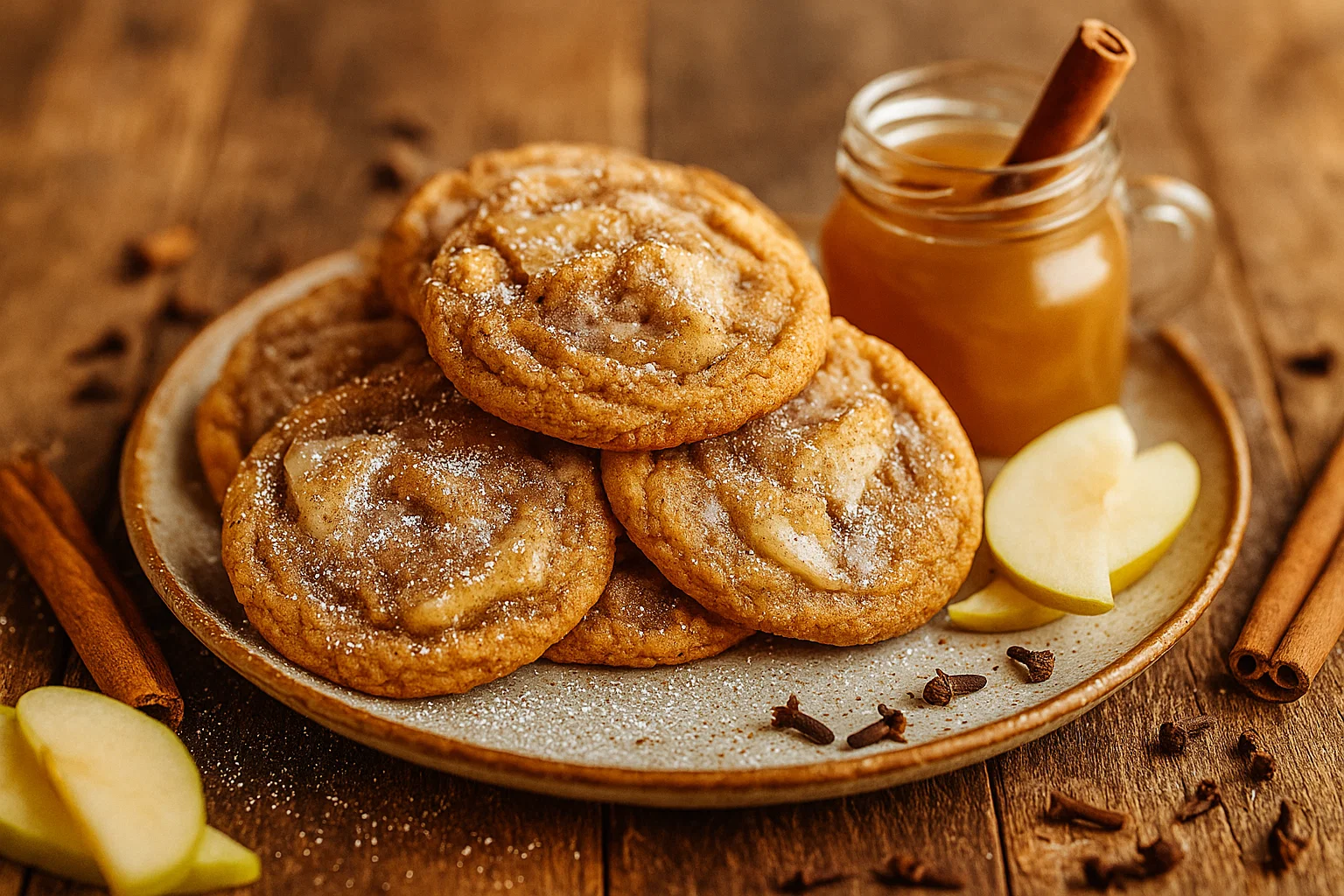
Apple Cider Cookies
Introduction to Apple Cider Cookies
Apple Cider Cookies bring the warm, spiced flavor of autumn into a soft, chewy cookie that satisfies sweet cravings without feeling heavy. The apple-infused batter and a hint of cinnamon create a classic, homey treat. If you’re looking for approachable baking that pleases many palates, Apple Cider Cookies deliver comfort and flavor with minimal fuss. Right from the start, these Apple Cider Cookies prove simple to make, easy to adapt for vegan or gluten-free diets, and perfect for busy cooks who want a wholesome homemade dessert.
These Apple Cider Cookies work well for families, students, busy parents, seniors, and working professionals who need quick baking wins. Moreover, they suit diet-conscious eaters when you substitute ingredients; therefore, you can enjoy a lower-calorie or plant-based version without losing taste. The recipe uses common pantry staples and freshly reduced apple cider to concentrate flavor naturally. In addition, the cookies pair well with tea, coffee, or a scoop of dairy-free ice cream, which makes them suitable for gatherings, lunchboxes, or quiet weeknight treats.
Finally, these Apple Cider Cookies invite creativity: try spicing them differently, adding nuts, or making sandwich cookies with cinnamon cream. Whether you’re a baking enthusiast, newlywed cooking for two, or a traveler craving familiar tastes, this recipe offers a reliable, adaptable base. Start with fresh apple cider, follow our straightforward steps, and you’ll have warm, fragrant cookies that feel like a hug in every bite.
Benefits and Advantages of Apple Cider Cookies
Apple Cider Cookies stand out because they blend convenience, health-conscious options, and crowd-pleasing taste. First, the preparation remains straightforward: you reduce apple cider to a syrup-like concentrate and fold it into a standard cookie dough. Therefore, even novice bakers will produce impressive results. Next, the recipe adapts easily for dietary needs; you can swap all-purpose flour for a gluten-free blend, use flax or chia eggs for a vegan approach, and choose lower-calorie sweeteners if desired.
Health benefits arise from using real apple cider and warming spices. For example, cinnamon adds antioxidant properties and a natural warmth that reduces the need for excess sugar. Meanwhile, apples bring trace vitamins and polyphenols when you use cider made from whole apples. Also, using oil or applesauce in place of butter can lower saturated fat and create a moist, tender texture. These Apple Cider Cookies therefore deliver flavor while offering healthier ingredient choices.
In addition, these cookies store and transport well, making them ideal for busy households or meal prepping. You can freeze dough balls for quick bakes later, and you can refrigerate baked cookies for several days without loss of texture if stored correctly. Furthermore, the flavor profile appeals to many demographics: kids love the sweetness, seniors appreciate the gentle spices, and diet-conscious eaters enjoy the ability to tailor ingredients.
Finally, Apple Cider Cookies make seasonal giftable treats and party snacks. They work as a thoughtful homemade present, especially when packaged in airtight tins. The combination of aromatic cider reduction and warm spices gives the cookies a gourmet feel, yet the method stays approachable for every level of home cook.
Ingredients Overview
Essential Ingredients for Apple Cider Cookies
- 1 cup apple cider (to reduce) concentrates flavor and adds natural apple sweetness.
- 2 1/4 cups all-purpose flour (for gluten-free: substitute 2 1/4 cups gluten-free 1-to-1 flour blend, equal volume) provides structure.
- 1 teaspoon baking soda helps cookies spread and rise slightly.
- 1/2 teaspoon baking powder gives lift and lighter texture.
- 1/2 teaspoon fine sea salt balances sweetness.
- 1 1/2 teaspoons ground cinnamon core warming spice for the apple-cider profile.
- 1/4 teaspoon ground nutmeg optional, adds depth.
- 3/4 cup (1 1/2 sticks) unsalted butter, softened (vegan option: use 3/4 cup dairy-free butter) tenderizes and adds richness.
- 1 cup packed light brown sugar provides moisture and caramel notes.
- 1/2 cup granulated sugar balances texture and sweetness.
- 1 large egg (vegan option: 1 flax egg = 1 tablespoon ground flaxseed + 3 tablespoons water) binds the dough.
- 1 teaspoon pure vanilla extract enhances overall flavor.
- 1/2 cup finely chopped apples or dried apple pieces (optional) boosts apple texture and flavor.
- Optional mix-ins: 1/2 cup chopped walnuts or pecans (omit for nut-free), 1/2 cup raisins or dairy-free chocolate chips.
Notes on measurements and purpose:
- Apple cider (reduced): Reducing concentrates natural sugars and intensifies apple flavor without artificial extracts.
- Flour choices: Use a spoon-and-level method with U.S. cups for accurate results. Gluten-free blends labeled 1:1 usually work best as they often contain xanthan or guar gum to replicate gluten’s structure.
- Sugar and butter ratios: Brown sugar keeps cookies soft and chewy; butter adds flavor. For lower-calorie options, substitute 1/4 cup applesauce for an equal portion of the butter (slightly firmer texture may result).
Dietary Substitutions to Customize Your Apple Cider Cookies
- Vegan: Replace butter with dairy-free margarine or coconut oil (solid at room temp) in a 1:1 ratio. Swap the egg for a flax or chia egg (1 tbsp ground seed + 3 tbsp water; let sit 5 minutes) or use commercially available egg replacer. Use non-dairy chocolate chips and avoid nuts if you need tree-nut-free.
- Gluten-free: Substitute a certified gluten-free all-purpose flour blend in equal volume. Check for xanthan gum in the blend; if missing, add 1/2 teaspoon xanthan per 2 1/4 cups flour to improve chewiness and structure.
- Lower calorie/lower fat: Replace up to 1/2 cup of butter with unsweetened applesauce. Additionally, use coconut sugar or a 1:1 natural sweetener like a monk-fruit blend to cut calories further. Keep in mind that texture will be slightly cakier.
- Sugar reduction/diabetic-friendly: Use a granulated erythritol blend labeled for baking in place of granulated sugar and a brown sugar substitute in place of packed brown sugar. Start with a 1:1 substitution and adjust to taste.
- Nut-free and allergy-prone households: Omit nuts and cross-check that all additives (like some chocolate chips) are produced in nut-free facilities.
- Paleo/Grain-free: Use almond flour combined with a bit of coconut flour (not 1:1) and add an extra egg or egg substitute for structure; note that texture and spread will differ.
These customizations help Apple Cider Cookies suit many dietary needs without sacrificing the fundamental warm, spiced taste.
How to Prepare the Perfect Apple Cider Cookies : Step-by-Step Guide
First Step: Reduce the cider.
- Pour 1 cup apple cider into a small saucepan. Bring it to a simmer over medium heat, then reduce to low and let it gently bubble until the volume decreases to about 1/4 cup, roughly 15–20 minutes. Stir occasionally to prevent burning. This reduction concentrates flavor and creates a sticky, aromatic syrup you’ll fold into the dough. For dietary adaptation, you can use a sugar-free apple concentrate, but reduce simmer time slightly because it may thicken faster.
Second Step: Prep dry ingredients.
- While the cider cools, whisk 2 1/4 cups all-purpose flour, 1 teaspoon baking soda, 1/2 teaspoon baking powder, 1/2 teaspoon sea salt, 1 1/2 teaspoons ground cinnamon, and 1/4 teaspoon nutmeg in a medium bowl. Sifting is optional but helps evenly distribute leaveners and spices. If using gluten-free flour, check for clumps and whisk thoroughly. Set this mix aside.
Third Step: Cream butter and sugars.
- In a large bowl, cream 3/4 cup softened unsalted butter with 1 cup packed brown sugar and 1/2 cup granulated sugar using a hand mixer or stand mixer on medium speed for about 2–3 minutes until light and fluffy. For vegan or lower-fat versions, cream dairy-free butter or a butter-applesauce blend; the texture will be slightly different but still tasty.
Fourth Step: Add wet flavorings.
- Beat in 1 large egg (or flax egg for vegan) and 1 teaspoon vanilla extract until incorporated. Then, add the cooled apple cider reduction in two additions, mixing gently. The reduction brings a strong apple aroma and a hint of acidity that balances sweetness. If your cider reduction becomes too thick, loosen it with a teaspoon of water.
Fifth Step: Combine dry and wet.
- Gradually add the dry ingredient mix to the butter-sugar mixture in three parts, mixing on low speed until just combined after each addition. Scrape down the bowl to ensure even distribution. Do not overmix; otherwise cookies will turn tough.
Sixth Step: Fold in mix-ins.
- Fold in 1/2 cup finely chopped fresh apples or dried apple pieces, and any optional add-ins like 1/2 cup chopped nuts or 1/2 cup chocolate chips. For gluten-free or nut-free adaptations, omit nuts and choose certified gluten-free mix-ins. Make sure the dough holds together; if it seems too sticky, chill for 15–30 minutes.
Seventh Step: Shape the dough.
- Preheat oven to 350°F (177°C). Line baking sheets with parchment paper. Scoop dough by tablespoon or 1.5-inch dough scoop and roll gently into balls. Place them 2 inches apart on the prepared sheet. For chewier cookies, press balls slightly; for puffier cookies, leave as rounded mounds.
Eighth Step: Add topping (optional).
- For a sweet finishing touch, roll dough balls in a cinnamon-sugar mixture (mix 2 tablespoons granulated sugar + 1/2 teaspoon cinnamon) before baking. Alternatively, top with a thin smear of apple-cider glaze after baking (mix 1/4 cup powdered sugar + 1 teaspoon cider reduction). For vegan or sugar-free variants, use powdered erythritol or a light drizzle of maple syrup.
Ninth Step: Bake.
- Bake cookies for 10–12 minutes at 350°F, rotating the sheet halfway through for even browning. Cookies should show set edges and slightly soft centers; they will continue to firm as they cool. For crispier edges, bake 1–2 minutes longer; for softer centers, reduce time by a minute.
Tenth Step: Cool and finish.
- Let cookies cool on the sheet for 5 minutes, then transfer them to a wire rack to cool completely. If adding a glaze, wait until cookies reach room temperature before drizzling. Store cooled cookies in an airtight container with parchment layers to maintain texture.
Eleventh Step: Adapt and experiment.
- To adapt for different dietary needs in the preparation, try using applesauce in step three to replace some butter, or substitute coconut sugar to lower glycemic impact. If making a large batch, freeze dough balls on a tray for 1 hour, then transfer to freezer bags; bake from frozen, adding 1–2 minutes to baking time.
Twelfth Step: Serve suggestions.
- Serve warm with tea, coffee, or a splash of milk. For a dessert twist, sandwich two cookies with cinnamon cream cheese frosting or a dairy-free cream alternative. These Apple Cider Cookies shine best when enjoyed within three days, though proper storage extends shelf life.
Mastering Apple Cider Cookies : Advanced Tips and Variations
- Tip: Perfecting texture If you want chewier Apple Cider Cookies, use more brown sugar than white sugar and slightly underbake by 30–60 seconds; the residual heat finishes the bake. For cakier cookies, increase baking powder by 1/4 teaspoon and add a tablespoon of milk or dairy-free milk to the dough.
- Tip: Spice balance Taste your cider reduction before adding it. If the cider tastes too sweet, add an extra pinch of salt to the dough. Conversely, a very tart reduction benefits from a tablespoon of brown sugar to round the flavor.
- Tip: Even spread Chill the dough for 30 minutes when you need thicker cookies. Alternatively, flatten dough balls slightly if you prefer flat, crisp-edged cookies.
- Tip: Intensify apple flavor Stir in 1/2 teaspoon apple pie spice or a touch of apple extract for a stronger apple note. However, reduce cinnamon by 1/4 teaspoon to avoid overwhelming the cookie.
- Tip: Texture enhancements Add 1/4 cup quick oats for chewiness, or 1 tablespoon ground almond meal for moisture. For a nutty crunch, toast chopped nuts before folding them in.
Popular variations:
- Apple Cider Sandwich Cookies: Make two thinner cookies and sandwich them with spiced cream cheese or mascarpone filling. For vegan versions, use a cashew-based cream filling.
- Apple Cider Oat Cookies: Substitute 1/2 cup of the flour for rolled oats (certified gluten-free if needed) and press the dough slightly flatter before baking.
- Maple-Apple Cider Cookies: Replace part of the brown sugar with 1/4 cup pure maple syrup and reduce the other liquid slightly to compensate. This variation pairs beautifully with toasted pecans.
- Brown Butter Apple Cider Cookies: Brown the butter before creaming for a nutty, caramelized undertone. Let it cool but keep it pourable, then combine with sugars and proceed as directed.
- Gluten-Free Crisps: Use a 1:1 gluten-free flour and bake slightly longer for crisper Apple Cider Cookies; they make elegant tea-time bites.
Additionally, try adding a pinch of ground cardamom or ginger to modernize the spice profile. For festive occasions, press a small caramel piece in the center after baking for a gooey surprise. With a few simple adjustments, Apple Cider Cookies transform into endlessly creative treats that match seasons and preferences.
How to Store Apple Cider Cookies : Best Practices
Proper storage keeps Apple Cider Cookies fresh and flavorful. First, let cookies cool completely to room temperature to avoid condensation that makes them soggy. Next, place cookies in an airtight container with layers separated by parchment paper to prevent sticking. Store at room temperature for up to 3 days; for soft texture, add a slice of apple to the container (replace daily) which helps retain moisture.
Refrigeration:
- Refrigerate in an airtight container for up to one week. Keep in mind that cold refrigeration can firm cookies; bring to room temperature or warm briefly in a low oven (300°F for 5 minutes) before serving to restore tenderness.
Freezing:
- Freeze baked cookies in a single layer on a baking sheet for 1 hour, then transfer to freezer-safe bags or containers with parchment layers for up to 3 months. Thaw at room temperature for 30–60 minutes. For frozen dough balls, bake from frozen and add 1–2 minutes to the regular baking time.
Reheating:
- Reheat cookies for 5–8 minutes at 300°F to refresh texture and warmth. For microwave reheating, 10–12 seconds typically suffice for one cookie; be careful not to overheat, which can make the cookie chewy or hard.
Labeling and rotation:
- Label containers with dates for rotation, and store gluten-free or allergen-free batches separately to avoid cross-contamination. These simple storage steps help Apple Cider Cookies remain a convenient, ready-to-enjoy treat for busy individuals and families.
Nutritional Value of Apple Cider Cookies
Below is a nutritional estimate per cookie (based on a batch yielding 30 medium cookies). Nutrition values vary with specific brands and ingredient swaps; therefore, treat these numbers as approximations:
| Nutrient | Amount per cookie |
|---|---|
| Serving Size | 1 cookie (approx. 28 g) |
| Calories | 120 kcal |
| Total Fat | 6.5 g |
| Saturated Fat | 3.5 g |
| Trans Fat | 0 g |
| Cholesterol | 20 mg |
| Sodium | 95 mg |
| Total Carbohydrates | 15 g |
| Dietary Fiber | 0.6 g |
| Sugars | 9 g |
| Protein | 1.5 g |
| Vitamin A | 2% DV |
| Vitamin C | 1% DV |
| Calcium | 2% DV |
| Iron | 4% DV |
Explanation and variations:
- Calories and macronutrients change based on substitutions. For a vegan version that replaces butter with coconut oil, saturated fat might increase (coconut oil is higher in saturated fat). Conversely, replacing 1/4 cup butter with unsweetened applesauce reduces fat and calories by approximately 20–30 kcal per cookie.
- For lower-sugar versions using erythritol or monk-fruit sweeteners, sugar grams drop significantly while caloric values decrease slightly. Note that sugar alcohols like erythritol add negligible calories.
- Gluten-free versions have comparable macro totals; however, some gluten-free flour blends absorb more moisture, which may require slight changes in fat or liquid and thus can shift calorie content.
- Fiber can increase if you add oats, chia seeds, or whole-apple pieces. For diet-conscious eaters, adding 1–2 tablespoons of ground flaxseed or oat bran per batch can raise fiber content and improve satiety.
- Protein is modest in the standard recipe. For a protein boost, consider adding 1/4 cup protein powder (unflavored or vanilla) to the dry mix, which raises protein by 2–3 grams per cookie but may slightly change texture.
In summary, Apple Cider Cookies offer a balanced treat that you can customize to fit calorie or dietary goals while enjoying spiced apple flavor.
FAQs: Frequently Asked Questions About Apple Cider Cookies
Q: Can I make Apple Cider Cookies without reducing the cider?
A: You can skip the reduction, but the apple flavor will be milder and the added liquid can change dough consistency. If you don’t reduce, use only 1–2 tablespoons of cider and reduce other wet ingredients slightly, or simmer for a shorter time until you reach a thickened syrup.
Q: Are these cookies easy to make vegan or gluten-free?
A: Yes. Swap butter for dairy-free margarine or solid coconut oil, use a flax or chia egg for binding, and replace all-purpose flour with a certified gluten-free 1:1 blend. Many readers successfully make Apple Cider Cookies vegan by following the substitutions in the ingredients section.
Q: How can I prevent cookies from spreading too much?
A: Chill the dough for 30–60 minutes before baking and make sure your butter wasn’t too warm when creaming. Also, check your leavening amounts; too much baking soda can cause excessive spread. Use a cookie scoop for uniform sizes to ensure even baking.
Q: Can I make these ahead and freeze the dough?
A: Absolutely. Scoop dough balls, freeze them on a sheet for an hour, then transfer to a freezer container. Bake from frozen and add 1–2 minutes to the bake time. This method suits busy parents and working professionals who want fresh cookies on demand.
Q: How do I make the cookies less sweet?
A: Reduce granulated sugar by 1/8 to 1/4 cup and slightly increase the brown sugar to preserve chewiness. Alternatively, use a natural sweetener like monk fruit or erythritol in a 1:1 baking ratio to cut sugar while keeping texture.
Q: Can I add nuts or chocolate chips?
A: Yes. Add up to 1/2 cup chopped nuts (walnuts or pecans) or dairy-free chocolate chips. If serving in nut-free environments, omit nuts and substitute with seeds like pumpkin or sunflower, if tolerated.
Q: What is the best way to get a strong apple flavor?
A: Reduce the apple cider to a concentrated syrup and optionally fold in 1/2 cup small diced fresh apples or dried apple pieces. Adding a small amount (1/4–1/2 teaspoon) of apple pie spice or apple extract intensifies the apple profile.
Q: How do I make gluten-free Apple Cider Cookies that aren’t crumbly?
A: Use a high-quality gluten-free 1:1 flour blend that contains xanthan or guar gum. If your blend lacks gum, add 1/2 teaspoon xanthan per 2 1/4 cups flour. Also avoid overbaking and follow chilling recommendations for better structure.
Q: Can I turn these into a sandwich cookie?
A: Yes. Bake slightly thinner cookies, cool completely, and sandwich with a flavored frostingcream cheese for traditional or cashew cream for vegan. A cinnamon buttercream or brown butter frosting pairs well with the apple spice.
Q: How long do Apple Cider Cookies last?
A: Stored at room temperature in an airtight container, they keep for up to 3 days. Refrigerate for up to a week, and freeze baked cookies for up to 3 months. For best flavor and texture, let refrigerated cookies come to room temperature before serving.
Q: Any tips for reducing passive voice and making the recipe easier to follow?
A: Follow each numbered or labeled step activelyuse verbs like “mix,” “fold,” “chill,” and “bake.” This guide uses active instructions to keep directions clear and approachable for cooks of all levels.
Q: Is it hard to scale the recipe for larger batches?
A: You can double or triple the recipe. However, scale reduction of cider carefullyreduce each cup of cider separately and measure accurately. Also, mix dry ingredients in larger bowls and monitor baking sheets to prevent overcrowding.
Q: What temperature and baking time work best for high-altitude baking?
A: At high altitudes, slightly increase oven temperature by 15–25°F and reduce baking soda by 1/8 teaspoon. You may also add 1–2 tablespoons of extra liquid (milk or dairy-free milk) to compensate for quicker evaporation.
Q: Can I make these nut-free for school lunches?
A: Yes. Omit nuts and ensure mix-ins are free from cross-contamination. Use seed alternatives if permitted by the school policy. These nut-free Apple Cider Cookies remain flavorful and family-friendly.
Q: How can I make a lower-sugar version that still tastes satisfying?
A: Replace granulated sugar with a 1:1 erythritol blend and use a brown sugar substitute for the packed brown sugar. Add natural spices and a touch of salt to enhance perceived sweetness without adding sugar.
Enjoy baking and sharing these Apple Cider Cookies with family and friends. They offer warmth, flexibility, and nostalgia, and they adapt easily to many dietary preferences. Try the basic recipe first, then experiment with the variations to create your signature cookie that still honors the sweet-spiced charm of apple cider.