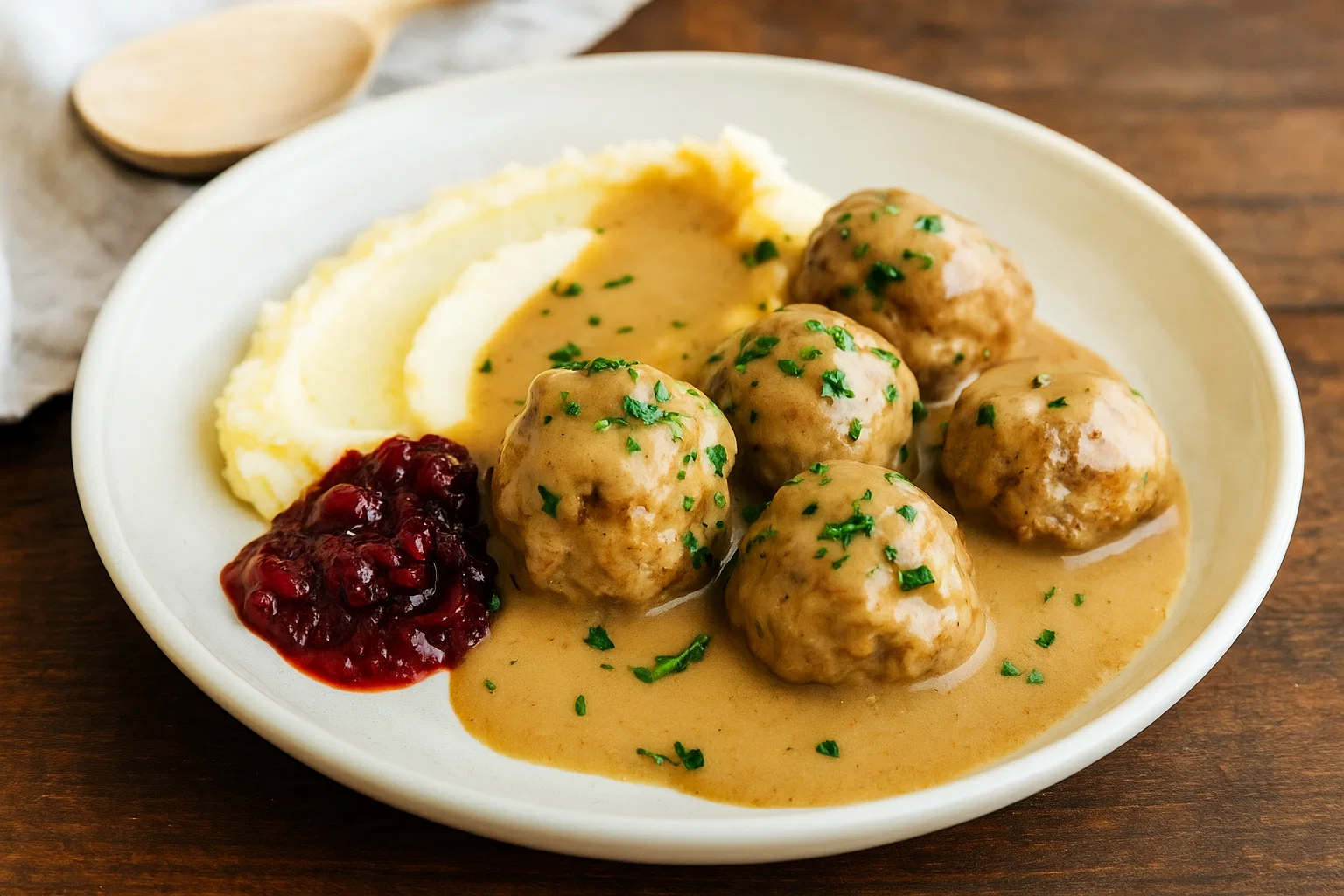
Easy Swedish Meatballs :
Introduction to Easy Swedish Meatballs
Easy Swedish Meatballs deliver classic comfort in a simple, modern package. The Easy Swedish Meatballs recipe blends tender, seasoned meatballs with a silky gravy, and it sits on a bed of creamy mashed potatoes or buttered noodles. Right away, this easy Swedish meatballs dish proves that you can enjoy a traditional Scandinavian favorite without hours of work. Moreover, busy cooks, new couples, students, seniors, and working professionals will all appreciate how approachable and satisfying this recipe feels. The focus stays on a balanced meal that can be adapted for health-conscious eaters, gluten-free diets, and even vegan menus.
This Easy Swedish Meatballs version keeps things light by using lean protein or plant-based alternatives, and therefore it reduces saturated fat and calories compared with heavier preparations. Additionally, the flavor profile remains true to the classic: warm nutmeg, fresh parsley, and a rich brown gravy that ties everything together. Because the technique uses pan-searing and a quick stovetop sauce, you can have this main course on the table in under an hour, which makes it ideal for weeknight dinners, meal prep, or a cozy weekend supper.
Whether you are a food enthusiast eager to master a traditional recipe, a traveler missing Nordic cuisine, or a parent looking for a family-friendly dinner, this Easy Swedish Meatballs guide walks you through every step. Furthermore, the instructions include substitutions for vegan, gluten-free, and low-calorie variants to ensure everyone can enjoy this comforting meal. Read on to discover why this recipe stands out, and learn how to adapt it to your lifestyle while keeping flavor front and center.
Benefits and Advantages of Easy Swedish Meatballs
Easy Swedish Meatballs combine flavor, speed, and flexibility, which explains why this dish fits so many lifestyles. First, the preparation remains straightforward. You mix pantry-friendly ingredients, shape small meatballs, brown them quickly, and finish them in a luscious gravy. Because the method uses minimal equipment, even novice cooks and students can create a restaurant-quality dish. Additionally, busy parents and working professionals will love how this recipe scales for family meals and leftovers.
Second, the health benefits make Easy Swedish Meatballs a smart choice for diet-conscious eaters. Choose lean ground turkey, chicken, or plant-based meat alternatives to cut saturated fat, and substitute whole-grain breadcrumbs or oats for extra fiber. Also, you can reduce sodium by using low-salt broth and limit added butter while keeping richness by stirring in a splash of low-fat milk or a dairy-free option. Consequently, the dish becomes suitable for heart-healthy diets and lower-calorie meal plans without sacrificing taste.
Third, the recipe offers adaptability for dietary restrictions. For gluten-free cooks, swap traditional breadcrumbs with certified gluten-free crumbs or crushed rice crackers. For vegan diners, use a well-seasoned blend of mashed beans, lentils, or commercially available meatless grounds, and create a plant-based gravy with vegetable broth and non-dairy cream. Moreover, seniors who need softer textures can make smaller, tender meatballs and simmer them gently in gravy for an easy-to-chew meal.
Finally, Easy Swedish Meatballs shine because they encourage creativity. Serve them over mashed cauliflower for a low-carb option, or pair them with barley or buttered egg noodles for a comforting plate. For gatherings, prepare the meatballs ahead and reheat in the sauce for effortless entertaining. Altogether, this recipe stands out as a versatile, wholesome, and gratifying classic that suits a wide range of palates and lifestyles.
Ingredients Overview
Essential Ingredients for Easy Swedish Meatballs
- 1 pound ground beef, 85% lean – provides rich flavor and a tender texture. (For a leaner option, use 93% lean beef)
- 1/2 pound ground pork – adds moisture and classic taste. Substitute with additional ground beef or turkey if desired.
- 1 cup plain breadcrumbs – helps bind and keep meatballs tender. For gluten-free use 1 cup certified gluten-free breadcrumbs.
- 1/4 cup milk (whole or 2%) – hydrates breadcrumbs and keeps meatballs moist. For dairy-free, use 1/4 cup unsweetened almond milk or oat milk.
- 1 large egg – binds the mixture and gives structure.
- 1/2 medium yellow onion, finely grated (about 1/2 cup) – builds savory depth.
- 2 cloves garlic, minced – boosts aromatic flavor.
- 1 teaspoon kosher salt – enhances overall seasoning. Reduce for low-sodium diets.
- 1/2 teaspoon ground black pepper – balances sweetness.
- 1/2 teaspoon ground allspice – traditional warming spice for Swedish meatballs.
- 1/4 teaspoon ground nutmeg – adds a subtle, classic warmth.
- 2 tablespoons fresh parsley, chopped – brightens the meatballs.
- 2 tablespoons olive oil or vegetable oil – for browning the meatballs.
For the gravy:
- 3 tablespoons unsalted butter – or use olive oil for a lighter version.
- 3 tablespoons all-purpose flour – thickens the sauce. For gluten-free, substitute with 3 tablespoons gluten-free 1-to-1 flour or cornstarch (use 2 tablespoons cornstarch mixed with 1/4 cup water).
- 2 cups beef broth – forms the base of the gravy. Use low-sodium beef stock or vegetable broth for a lighter flavor or vegetarian option.
- 1/2 cup heavy cream – creates silky texture. For a lower-calorie alternative, use 1/2 cup low-fat milk or 1/2 cup unsweetened oat milk.
- 1 tablespoon Worcestershire sauce – deepens umami. For a vegan substitute, use a vegan Worcestershire or 1 tablespoon tamari plus 1 teaspoon apple cider vinegar.
- Salt and black pepper to taste.
Serving suggestions:
- Mashed potatoes, buttered egg noodles, or cauliflower mash.
- Pickled cucumbers, lingonberry jam, or steamed green beans for traditional or fresh sides.
Dietary Substitutions to Customize Your Easy Swedish Meatballs
- Vegan option: Replace the 1 1/2 pounds of mixed meats with 1 1/2 pounds of plant-based ground “meat” or a mixture of 2 cups cooked lentils plus 1 cup mashed chickpeas. Use 1/4 cup flaxseed meal mixed with 3/4 cup water as an egg substitute, and swap milk and cream for unsweetened almond or oat milk and a vegan butter alternative. For gravy, use vegetable broth and a vegan cream or full-fat coconut milk for richness. Add 1 teaspoon soy sauce or tamari for depth.
- Gluten-free option: Use certified gluten-free breadcrumbs or 1 cup cooked quinoa or 1/2 cup rolled oats (gluten-free) as a binder. For the gravy, use gluten-free flour blend or cornstarch as noted above. Ensure Worcestershire sauce is gluten-free or use tamari.
- Low-calorie option: Use a 50/50 mix of lean ground turkey and extra-lean ground beef, substitute half the butter with olive oil, and use low-fat milk instead of heavy cream. Serve on mashed cauliflower or cauliflower rice to lower carbohydrate and calorie totals.
- Low sodium: Choose low-sodium broth, omit or reduce added salt, and use fresh herbs to boost flavor. Replace Worcestershire sauce with a homemade reduced-sodium umami mix: 1 teaspoon tomato paste plus 1 teaspoon balsamic vinegar.
- Dairy-free: Use almond or oat milk for the milk in the meatball mix and a dairy-free cream or canned coconut milk for the gravy. Use vegan butter or olive oil to roux.
- Egg-free: Use a commercial egg replacer or 1/4 cup aquafaba (chickpea liquid) per egg, or use a flax or chia egg as described above.
These swaps let you keep the classic character while making Easy Swedish Meatballs suitable for many diets. The result stays flavorful, and in most cases, the texture remains satisfyingly close to the original.
How to Prepare the Perfect Easy Swedish Meatballs : Step-by-Step Guide
First Step: Prep ingredients and equipment. Finely grate the onion and mince the garlic. Measure breadcrumbs, milk, spices, and oil. Line a baking sheet with parchment paper or lightly oil a skillet for holding finished meatballs. If you adapt this recipe for a vegan version, prepare mashed beans or plant-based ground and mix flax egg replacement now. Also, warm the milk slightly if using chilled ingredients so the crumbs hydrate evenly.
Second Step: Soak breadcrumbs. In a medium bowl, combine 1 cup plain breadcrumbs and 1/4 cup milk. Stir and let sit for 5 minutes until the crumbs absorb the liquid. This hydrates the binder and helps keep meatballs tender. For a gluten-free approach, use gluten-free crumbs and the same soaking method.
Third Step: Combine proteins and aromatics. In a large bowl, add 1 pound ground beef and 1/2 pound ground pork. Then add the soaked breadcrumbs, 1 large egg, grated onion, minced garlic, 1 teaspoon kosher salt, 1/2 teaspoon ground black pepper, 1/2 teaspoon allspice, 1/4 teaspoon nutmeg, and 2 tablespoons chopped fresh parsley. If you use lean turkey or plant-based proteins, include a tablespoon of olive oil to increase moisture. Use your hands or a large spoon to gently mix until combined, taking care not to overwork the meat which can toughen the meatballs.
Fourth Step: Shape meatballs. Scoop about 2 tablespoons of mixture and roll into 1-inch to 1 1/4-inch meatballs. Place formed meatballs on the prepared baking sheet. For easier portion control and uniform cooking, use a cookie scoop. For seniors or for a softer eat, make smaller meatballs about 3/4-inch across and press them slightly flatter so they cook through gently.
Fifth Step: Brown meatballs in batches. Heat 2 tablespoons oil in a large skillet over medium-high heat. Add meatballs in a single layer without crowding; brown them on all sides for about 6 to 8 minutes total, turning carefully so every side gets color. You do not need to fully cook them through at this stage because they will finish cooking in the sauce. For a gluten-free skillet method, ensure your oil and pan are clean and dry.
Sixth Step: Remove browned meatballs and reserve. Transfer browned meatballs to a plate and tent loosely with foil. Leave any brown bits in the skillet because they add flavor to the gravy. For an oven finish, you can place the browned meatballs on a baking sheet and bake at 350 F for 10 minutes if you prefer hands-off cooking, then proceed to finish them in the sauce.
Seventh Step: Make the roux for gravy. Reduce heat to medium and add 3 tablespoons butter to the same skillet. Once melted, sprinkle 3 tablespoons all-purpose flour and whisk constantly for 1 to 2 minutes to cook the raw flour taste and form a light brown roux. For a gluten-free roux, add 2 tablespoons cornstarch mixed with 1/4 cup cold water once the broth goes in; do not cook the cornstarch with butter.
Eighth Step: Deglaze and build the sauce. Slowly whisk in 2 cups beef broth, scraping up browned bits from the pan. Then add 1 tablespoon Worcestershire sauce and bring to a gentle simmer. If you are using low-sodium broth or a vegetarian broth, taste and adjust seasoning as needed.
Ninth Step: Add cream and adjust texture. Stir in 1/2 cup heavy cream and simmer until the sauce thickens to coat the back of a spoon. For lighter versions, use low-fat milk or unsweetened oat milk and whisk in 1 tablespoon butter or 1 teaspoon olive oil to mimic richness. If using cornstarch, add the slurry during this step and simmer for a minute until glossy.
Tenth Step: Finish meatballs in the gravy. Return the meatballs to the skillet, spoon sauce over them, and reduce heat to low. Simmer gently for 8 to 12 minutes, or until meatballs reach an internal temperature of 160 F for beef/pork or 165 F for poultry. For vegan meatballs, simmer until heated through and the sauce has fully absorbed flavors.
Eleventh Step: Taste and season. Taste the gravy and add salt and pepper as needed. Stir in 1 tablespoon chopped fresh parsley for brightness. If you prefer tang, add a teaspoon of apple cider vinegar or a spoon of lingonberry jam when serving for a traditional Nordic contrast.
Twelfth Step: Serve and garnish. Plate meatballs over mashed potatoes, buttered noodles, or cauliflower mash. Spoon extra gravy on top, and garnish with a sprinkle of freshly chopped parsley and a side of pickled cucumbers or steamed vegetables. For a gluten-free presentation, choose gluten-free noodles or steamed root vegetables.
Thirteenth Step: Adapt and store leftovers. Let leftovers cool slightly before refrigerating in an airtight container for up to 4 days. Freeze single portions in freezer-safe containers for up to 3 months. When reheating, warm gently in a skillet or microwave and add a splash of broth or milk to refresh the sauce.
These steps keep the process clear and repeatable, and they include options for vegan, gluten-free, low-calorie, and low-sodium adaptations. Consequently, you can make Easy Swedish Meatballs that suit your household while preserving the comforting taste everyone loves.
Mastering Easy Swedish Meatballs : Advanced Tips and Variations
- Tip: Balance moisture and binding. If your mixture feels too wet, add 2 tablespoons of breadcrumbs at a time until it firms up. Conversely, if it seems dry, add a tablespoon of milk or olive oil. This small adjustment helps produce meatballs that stay tender and do not crumble.
- Tip: Chill the mixture for better shaping. For cleaner, round meatballs, refrigerate the mixed meatball mixture for 30 minutes. This allows the binder to firm up and makes rolling faster. Moreover, chilling improves texture when you use lean meats or plant-based blends.
- Tip: Use two cooking methods for best texture. Brown meatballs in a skillet for flavor, then finish in the oven at 350 F for 10 minutes to ensure even cooking. Alternatively, sear in a cast-iron skillet and finish covered over low heat on the stovetop to keep them moist.
- Tip: Flavor layering in gravy. After making the roux and adding broth, stir in 1 teaspoon Dijon mustard or 1/2 teaspoon smoked paprika for depth. Add a splash of soy sauce or tamari for umami if you want to skip Worcestershire sauce.
- Variation: Swedish-style with lingonberry. Serve meatballs with a dollop of lingonberry jam or cranberry compote for a sweet-tart contrast. This is the classic Scandinavian approach that brightens the plate.
- Variation: Mushroom gravy. For an earthy variant, sauté 1 cup sliced mushrooms after browning meatballs, then build your gravy with mushrooms included. This increases vegetable content and flavor complexity and works well for vegetarians using plant-based balls.
- Variation: Herb-forward meatballs. Mix in 1 tablespoon each of chopped dill and chives for a fresher, lighter character. Dill pairs beautifully with the nutmeg and allspice and complements fish or turkey versions.
- Variation: Spiced Swedish fusion. Add 1/2 teaspoon smoked paprika and 1/4 teaspoon cayenne for a slightly smoky, warm twist. This variation suits those who like a subtle kick without overwhelming the signature flavors.
- Tip: Make-ahead and freezing. Form and flash-freeze meatballs on a baking sheet, then transfer to freezer bags. Freeze raw meatballs up to 3 months. When ready to cook, brown from frozen for an extra couple of minutes per side and then finish in the sauce.
- Tip: Texture for seniors and children. To create softer meatballs, include 1/4 cup plain Greek yogurt in the mix or use soaked breadcrumbs and a slightly higher ratio of milk. Cook gently and avoid overbrowning.
- Tip: Presentation for entertaining. Keep meatballs warm in a slow cooker set to low with sauce for parties. Add fresh parsley and a small bowl of lingonberry jam nearby for guests to add as they like.
These tips and variations help you master Easy Swedish Meatballs. They also offer ways to explore flavor and texture while making the recipe kinder to special diets, time constraints, and entertaining needs.
How to Store Easy Swedish Meatballs : Best Practices
Refrigeration: Cool the dish to room temperature for up to 1 hour, then transfer to an airtight container. Store in the refrigerator for up to 4 days. When reheating refrigerated meatballs, warm gently in a skillet over low heat with a splash of broth or milk to loosen the gravy and prevent dryness. For microwave reheating, heat in 30-second increments and stir between cycles.
Freezing: For longer storage, freeze meatballs in sauce or freeze meatballs separately for flexibility. To freeze in sauce, cool completely, then pour into freezer-safe containers or heavy-duty freezer bags and remove as much air as possible. Label with date and freeze for up to 3 months. To freeze raw or pre-browned meatballs, place them on a parchment-lined baking sheet and freeze until firm, then transfer to freezer bags. This method helps maintain shape and texture.
Thawing: Thaw frozen meatballs overnight in the refrigerator for best results. If you need a quicker method, place the sealed bag in cold water for 30 to 60 minutes, changing the water every 20 minutes. Avoid thawing at room temperature to reduce bacterial risk.
Reheating from frozen: Reheat frozen meatballs in sauce directly on the stovetop over low heat, covered, for 20 to 30 minutes until heated through. If baking, place in a preheated oven at 350 F, covered with foil, for 20 to 30 minutes. Stir occasionally and add a tablespoon of broth or milk if the sauce appears thickened from freezing.
Quality tips: Freeze in single-serving portions for easier meal prep and to reduce waste. For gluten-free and vegan versions, store separately from meat-based dishes to prevent cross-contamination if necessary. Finally, use a thermometer to ensure reheated meatballs reach 165 F internal temperature for safe consumption.
Nutritional Value of Easy Swedish Meatballs
The following nutrition table reflects approximate values per serving for a standard recipe that yields about 6 servings. Values assume a mix of 1 pound ground beef (85% lean) and 1/2 pound pork, served with gravy. For vegan or gluten-free variants, nutritional values will change based on substitutions such as plant-based ground, non-dairy milk, and gluten-free flours.
| Nutrient | Amount per serving (approx) |
|---|---|
| Calories | 420 kcal |
| Total Fat | 28 g |
| Saturated Fat | 11 g |
| Trans Fat | 0.5 g |
| Cholesterol | 110 mg |
| Sodium | 680 mg |
| Total Carbohydrates | 11 g |
| Dietary Fiber | 0.8 g |
| Sugars | 3 g |
| Protein | 27 g |
| Vitamin A | 6% Daily Value |
| Vitamin C | 2% Daily Value |
| Calcium | 8% Daily Value |
| Iron | 18% Daily Value |
Notes and alternatives:
- Lower-calorie option: Using 1.5 pounds lean ground turkey and substituting low-fat milk for cream reduces calories to approximately 300 to 320 per serving and drops saturated fat notably. Protein remains high while calories decline.
- Vegan variant: A lentil-chickpea base with non-dairy milk and oil-based roux will yield roughly 250 to 320 calories per serving depending on added oils and binders, with protein around 12 to 18 g per serving.
- Gluten-free switch: Using gluten-free flour or cornstarch and gluten-free breadcrumbs changes carbohydrate and fiber slightly but does not significantly alter calorie count.
- Reduce sodium: Choose low-sodium broth and omit or reduce added salt to drop sodium by 200 to 300 mg per serving.
- Micronutrients: Ground beef adds iron and zinc, and adding parsley or spinach to the meatball mix increases vitamin C and vitamin K content.
This nutritional snapshot helps you customize Easy Swedish Meatballs to meet calorie goals, macro targets, or micronutrient needs. For more precise calculations, input your exact brands and substitutions into a nutrition calculator or app.
FAQs: Frequently Asked Questions About Easy Swedish Meatballs
Q: Can I make Easy Swedish Meatballs ahead of time?
A: Yes. Prepare and shape the meatballs, then refrigerate them up to 24 hours before browning and simmering in sauce. Alternatively, fully cook, cool, and store in the refrigerator for up to 4 days, or freeze cooked portions for up to 3 months. When reheating, warm gently in sauce so they stay moist.
Q: What’s the best way to prevent meatballs from falling apart?
A: Use soaked breadcrumbs and an egg to bind. Mix gently without overworking the meat which can make them tough. Chill the mixture briefly to firm it up before shaping; this helps maintain structure during cooking.
Q: How do I make this recipe gluten-free?
A: Swap plain breadcrumbs for certified gluten-free breadcrumbs or cooked quinoa. Replace all-purpose flour in the gravy with a gluten-free flour blend or cornstarch slurry. Ensure Worcestershire sauce and broth are gluten-free.
Q: Can I make Easy Swedish Meatballs vegan?
A: Absolutely. Use a plant-based ground or a combination of cooked lentils and mashed chickpeas as the base. Replace the egg with a flax or chia egg or with aquafaba. Use vegetable broth and non-dairy milk for the gravy, and substitute vegan butter for a dairy-free roux.
Q: How do I keep the gravy from getting lumpy?
A: Whisk continuously when adding the broth to the roux, and pour slowly to ensure a smooth emulsion. If using cornstarch, mix it with cold water first and stir it into simmering broth; this reduces clumping.
Q: Can I bake meatballs instead of pan-frying?
A: Yes. After shaping, place meatballs on a parchment-lined sheet and bake at 400 F for 12 to 15 minutes until firm and brown. Then transfer to the sauce and simmer for 6 to 8 minutes to absorb flavor. Baking reduces added oil and makes cleanup easier.
Q: What protein alternatives work best for a leaner dish?
A: Use lean ground turkey, extra-lean ground beef, or a blend. Adding a tablespoon of olive oil can help maintain tenderness when using very lean meat. For increased protein with lower fat, choose ground chicken or turkey breast.
Q: How do I adjust seasoning for low-sodium diets?
A: Use low-sodium or homemade broths, reduce added salt, and boost flavor with garlic, onion, fresh herbs like parsley and dill, and a squeeze of lemon juice or a small spoonful of mustard for brightness.
Q: What sides pair well with Easy Swedish Meatballs?
A: Traditional sides include mashed potatoes and lingonberry jam. For lighter options, serve with roasted root vegetables, steamed green beans, buttered egg noodles, or mashed cauliflower. Pickled cucumbers or a crisp salad add brightness.
Q: How many servings does this recipe make and can I scale it?
A: The standard recipe yields about 6 servings. Scale up or down linearly: double ingredients for 12 servings or halve for 3 servings. Keep cooking times similar for meatball size and adjust batch frying as needed.
These frequently asked questions address common concerns about substitutions, storage, and technique to help you succeed with Easy Swedish Meatballs in any kitchen.
Enjoy making Easy Swedish Meatballs, and remember that small adjustments let you tailor this comforting classic to your lifestyle, dietary needs, and taste preferences. Whether you’re cooking for a busy weeknight, a special dinner, or prepping meals for the week, this recipe offers dependable flavor, practical flexibility, and timeless comfort.