10 Smart Cleaning Hacks and Home Cleaning Products for a Cleaner Home
Keeping a home fresh and tidy does not always require complicated routines or hours of scrubbing. A few practical cleaning products, the right tools, and simple habits can make everyday chores much easier. From microfiber cloths and steam cleaners to specialized products for drains, walls, fabrics, and jewelry, a smart cleaning routine can help you tackle different surfaces with less effort.
Key Takeaways
- Choose cleaning tools based on the surface and type of mess.
- Microfiber materials can be useful for everyday dust and surface cleaning.
- Steam cleaning offers a convenient way to loosen grime without relying only on scrubbing.
- Specialized cleaners can make tasks such as drain, wall, fabric, and metal care more manageable.
- Protective products can help maintain fabrics and frequently used surfaces.
- A small collection of versatile cleaning essentials can simplify your routine.
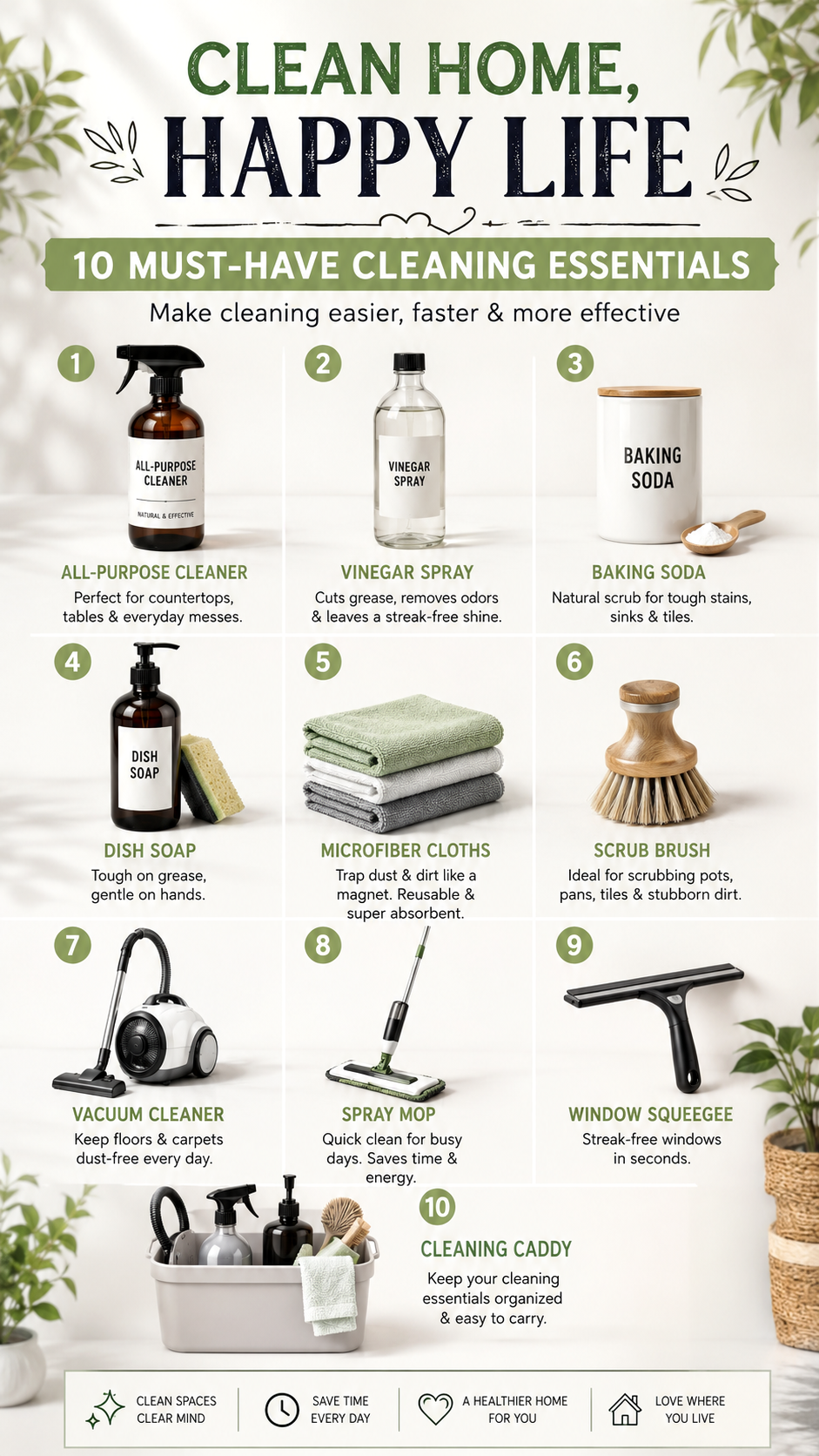
What makes a cleaning routine effective is not simply having more products. It is knowing which tool belongs to each job. The collection of cleaning essentials shown here covers several common household tasks, giving you a useful starting point for creating a more organized cleaning system.
Build a Smarter Home Cleaning Routine
A good cleaning routine starts with dividing chores into categories. General surface cleaning, floors, bathrooms, fabrics, drains, walls, and delicate items all have different needs. Using the same product everywhere can be ineffective and may even damage certain materials.
Instead, keep a small group of purpose-driven supplies together. A cleaning paste can handle stubborn marks, microfiber cloths are useful for routine wiping, and a mop and bucket can take care of larger floor areas. More specialized tools can then be brought out when a particular problem appears.
Important: Always check a product’s label and the manufacturer’s care instructions before applying a cleaner to a new surface. Test unfamiliar products on a small, inconspicuous area first.
1. Cleaning Paste for Stubborn Household Messes
A versatile cleaning paste is a useful addition to a household cleaning kit because it can provide extra cleaning power when ordinary wiping is not enough. It is particularly handy for areas where grime has built up and requires gentle agitation.
Use a small amount rather than covering an entire surface at once. Apply it according to the product directions, work in a controlled area, and rinse or wipe away residue as recommended. This approach helps prevent unnecessary product waste while allowing you to concentrate on the spots that need attention most.
2. Microfiber Cloths for Everyday Cleaning
Microfiber cloths are one of the simplest ways to make regular cleaning more efficient. Keep several cloths available so you can dedicate different ones to separate areas of the home. For example, you might use one set for general surfaces and another for bathrooms.
They are especially convenient for wiping counters, furniture, appliances, and other smooth surfaces. A clean, dry microfiber cloth can also be useful for removing light dust, while a slightly damp cloth can help with everyday marks and residue.
Pro Tip: Assigning separate cloths to different cleaning zones helps keep your routine organized. Wash reusable cloths properly after use and avoid mixing heavily soiled cleaning materials with ordinary household laundry.
3. Make Floor Cleaning Easier With a Mop and Bucket Set
Floor cleaning becomes much less frustrating when your mop and bucket are easy to use and store. A practical mop system can help you cover larger areas efficiently while reducing the amount of time spent repeatedly wringing out a mop.
Before mopping, remove loose dust and debris from the floor. This prevents dirt from turning into muddy residue as you clean. Work in manageable sections and follow the flooring manufacturer’s recommendations regarding moisture and cleaning solutions.
4. Protect High-Use Surfaces With the Right Care Products
The image also highlights a ceramic surface coating designed for areas such as countertops, stainless steel, and glass. Products in this category are intended to add a protective layer that can make routine maintenance easier.
Surface coatings should be approached differently from everyday cleaners. The surface generally needs to be thoroughly cleaned and prepared before application, and the product directions should be followed carefully. Preparation is just as important as the coating itself.
Why This Matters
The easiest cleaning routine is often the one that prevents excessive buildup. Regularly wiping high-touch and high-use surfaces can reduce the need for aggressive cleaning later and helps keep maintenance manageable.
5. Use a Steam Cleaner for Hard-to-Reach Areas
A handheld steam cleaner can be a useful tool when you want to loosen grime with heat and moisture. The compact design shown in the image is suited to targeted cleaning tasks rather than replacing every other cleaning method in your home.
Steam can be particularly convenient for crevices, fixtures, and other areas where traditional wiping can be awkward. However, not every material is suitable for steam. Always confirm compatibility before using steam on painted surfaces, delicate materials, finished wood, electronics, or other sensitive areas.
6. Keep Drains Fresh With Appropriate Drain Cleaner
Slow or unpleasant-smelling drains are common household maintenance problems. A dedicated drain cleaner can be useful when used exactly as directed. The products shown in the image are designed specifically for drain-related cleaning.
Read the label before use and follow all safety instructions. Never casually mix different drain products or combine chemical cleaners unless the manufacturer specifically states that doing so is safe. Good ventilation and appropriate protective measures are also important when working with stronger cleaning formulas.
7. Make Shoe Care Less Messy With a Washing Bag
A shoe washing bag can make certain washable footwear easier to manage. Instead of allowing shoes to move freely around a washing machine, a protective bag can help contain them and reduce unnecessary contact with the machine interior.
Not every pair of shoes should go into a washing machine. Check the shoe manufacturer’s care instructions first. Remove loose dirt, take out removable inserts when appropriate, and use a gentle cleaning method suited to the material.
8. Refresh Walls With a Suitable Wall Cleaner
Walls can collect dust, fingerprints, cooking residue, and everyday marks over time. A dedicated wall cleaner can be convenient when ordinary dusting is no longer enough.
Wall finishes vary considerably, so test any cleaner in a discreet area before treating a visible section. Avoid saturating painted surfaces unless the product and paint manufacturer indicate that it is appropriate. Gentle, controlled cleaning is usually preferable to aggressive scrubbing.
9. Help Protect Fabrics From Everyday Wear
A fabric protector can be useful for maintaining items that are exposed to frequent handling or occasional spills. The image features a spray-style fabric protection product, which can be incorporated into a preventative home care routine.
Always check whether the protector is compatible with the specific fabric before application. Clean the fabric first when required, allow it to dry appropriately, and follow the product’s instructions for ventilation and application distance.
Expert Insight: Preventative care can save time. Keeping frequently used fabrics, surfaces, and household items in good condition often means fewer intensive cleaning sessions later.
10. Give Jewelry Extra Attention
Jewelry needs a more careful approach than ordinary household surfaces. Specialized jewelry wipes, such as the type shown in the image, can provide a convenient option for routine maintenance of compatible pieces.
Before using any jewelry cleaning product, check the manufacturer’s recommendations and consider the material, finish, stones, and construction of the piece. Some gemstones and delicate finishes require specialized care, so when in doubt, professional cleaning advice is the safer choice.
How to Organize Your Cleaning Supplies
Having useful cleaning products is only half the battle. An organized storage system makes it much easier to maintain a consistent routine. Group supplies according to how often you use them and the rooms where they belong.
- Keep everyday items such as microfiber cloths and general cleaners somewhere accessible.
- Store floor-cleaning tools together so mopping does not become a search for supplies.
- Keep specialized products clearly labeled and separated from general household items.
- Store chemical cleaners according to their labels and away from children and pets.
- Check supplies regularly and replace damaged, expired, or empty products.
Create a Simple Weekly Cleaning Rhythm
You do not need to tackle every cleaning task every day. A rotating schedule can keep chores from becoming overwhelming. Focus on high-use areas first, then handle deeper tasks as needed.
For daily maintenance, concentrate on obvious spills, clutter, kitchen surfaces, and high-touch areas. During a weekly cleaning session, move on to floors, bathrooms, dusting, and other routine jobs. Less frequent tasks, such as detailed wall cleaning or specialty item care, can be scheduled monthly or whenever they are actually needed.
- Daily: Wipe obvious messes, tidy surfaces, and address spills promptly.
- Weekly: Clean floors, bathrooms, frequently used surfaces, and fabrics as needed.
- Monthly: Review less-visible areas and tackle specialty cleaning projects.
At a Glance
- Use the right product for the specific surface.
- Microfiber cloths are convenient for everyday wiping and dust removal.
- Steam cleaners can help with targeted cleaning when the surface allows it.
- Specialty products are useful for drains, fabrics, walls, shoes, and jewelry.
- Read labels and surface-care instructions before trying a new cleaner.
Conclusion
A cleaner home is easier to maintain when your cleaning routine is simple, organized, and matched to the job. Instead of relying on one product for everything, build a practical collection of tools that covers everyday surfaces, floors, fabrics, drains, walls, shoes, and delicate household items.
From microfiber cloths and a dependable mop system to targeted cleaners and protective treatments, the right essentials can turn routine chores into more manageable tasks. Start with the areas that need attention most, keep your supplies organized, and make small cleaning habits part of your weekly rhythm. A little consistency can make a noticeable difference in how your home looks and feels.