Kitchen Organization Ideas Smart Storage Solutions for a Beautiful, Clutter-Free Home
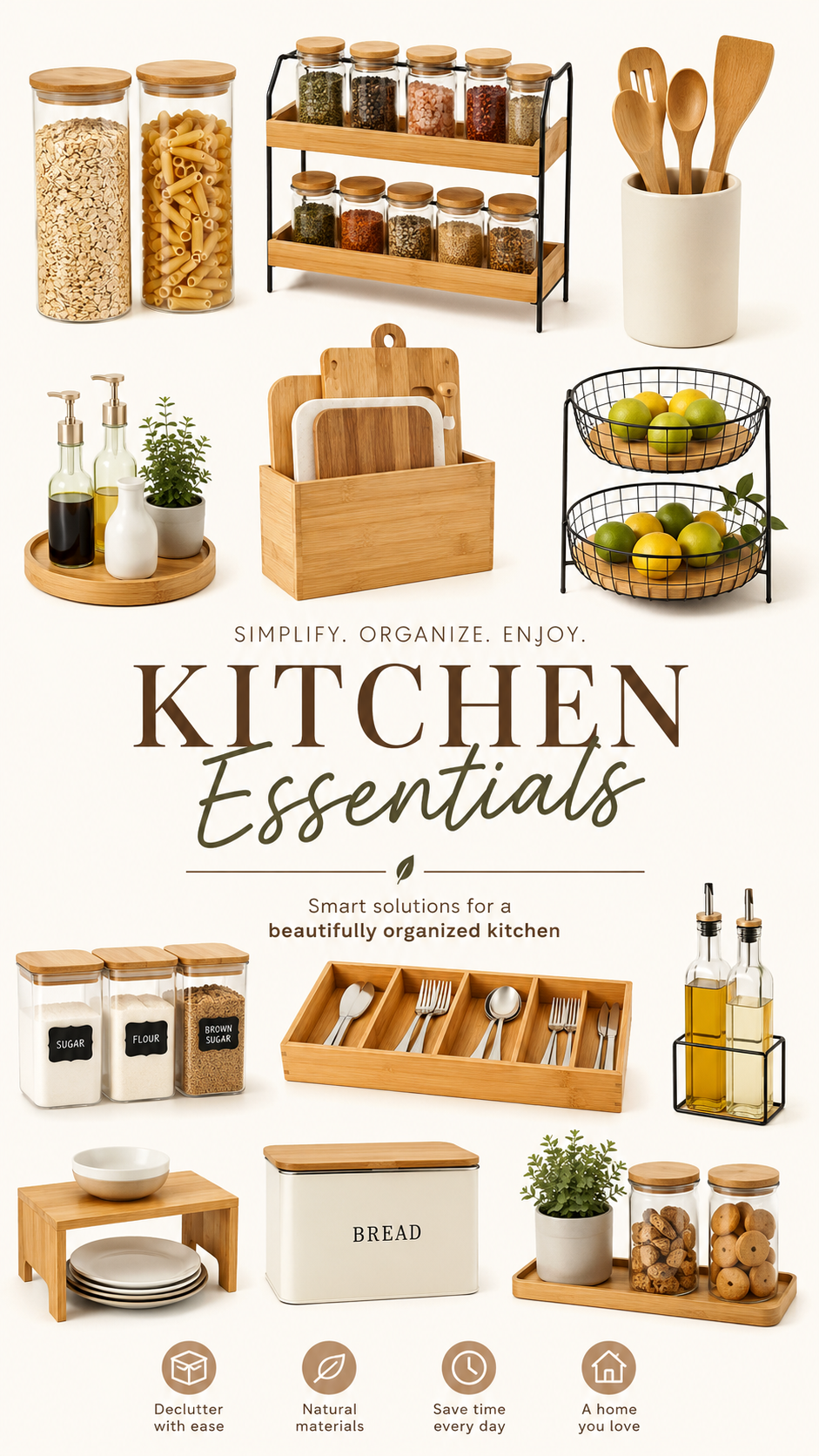
A well-organized kitchen can make everyday cooking feel simpler, calmer, and much more enjoyable. The right storage pieces can turn crowded cabinets and messy countertops into a practical space where ingredients, cookware, and daily essentials are easy to find. The kitchen shown here brings together warm bamboo storage, clear containers, labeled pantry organizers, countertop trays, and compact shelving to create a clean and functional look.
Important: Great kitchen organization is not about filling every cabinet with containers. It is about giving frequently used items a logical home, keeping essentials visible, and choosing storage solutions that make everyday routines easier.
Key Takeaways
- Use clear containers to make pantry ingredients easier to see.
- Choose labeled storage for a cleaner, more consistent appearance.
- Use drawer and cabinet organizers to make better use of available space.
- Add trays to group frequently used countertop essentials.
- Favor practical materials and simple designs for a timeless kitchen.
- Keep everyday items accessible while storing occasional-use pieces away.
Create a Kitchen That Works for Your Daily Routine
The most successful kitchen organization ideas begin with the way you actually use your kitchen. Instead of organizing everything according to appearance alone, think about what you reach for every day. Breakfast ingredients, coffee supplies, cooking staples, utensils, and cleaning products should all be positioned where they are convenient to access.
The visual theme here is especially effective because the storage pieces work together rather than looking like unrelated additions. Warm wood tones create consistency, while transparent containers keep ingredients visible. Simple labels add structure without making the kitchen feel overly complicated.
A useful starting point is to divide your kitchen into functional zones. A pantry zone can hold dry ingredients, a coffee zone can keep beans and accessories together, and a cleaning zone can contain soap and other frequently used supplies. This approach reduces unnecessary movement and makes it easier to put things back where they belong.
Make Pantry Storage Simple and Visible
Pantry organization is one of the easiest ways to create a more orderly kitchen. The image features clear storage containers for cereal, pasta, coffee, beans, and other dry goods. This type of storage helps create visual consistency while allowing you to see what you have at a glance.
Clear containers are particularly useful for ingredients that are purchased frequently. When the contents are visible, it becomes easier to notice when supplies are running low. Matching containers can also make open shelving or pantry shelves look less cluttered.
Use Labels for a Cleaner Pantry
Labels are a small detail that can make a major difference. Simple labels identify the contents of each container and create a cohesive appearance. They can be especially helpful when several dry ingredients look similar or when multiple people share the kitchen.
For the cleanest look, keep labels consistent in size, placement, and style. You do not need to label every single item. Focus on staples stored in containers, especially foods that are easy to confuse.
Store Ingredients According to Use
Think about frequency before deciding where ingredients should go. Everyday staples should be placed within easy reach, while specialty ingredients can occupy higher shelves or less accessible cabinets. Grouping similar items together also makes meal preparation faster.
- Keep breakfast ingredients together.
- Group pasta, grains, and other dry staples in one pantry area.
- Store coffee and beverage supplies together.
- Place less frequently used ingredients in secondary storage areas.
Choose Storage That Saves Cabinet Space
Kitchen storage does not always require a larger room. Sometimes the biggest improvement comes from using existing space more intelligently. The bamboo drawer organizers, divided trays, shelves, and compact racks shown in the design demonstrate how small organizational pieces can create useful sections inside larger storage areas.
Drawer dividers are particularly helpful for preventing utensils and smaller kitchen tools from becoming mixed together. Instead of opening a drawer filled with loose objects, each category can have its own designated section.
Tiered organizers can also make better use of vertical space. Rather than stacking cans or containers on top of one another, a raised shelf can allow multiple rows to remain visible. This makes it easier to identify what you need without moving everything around.
Pro Tip: Before buying new organizers, measure the width, depth, and height of the space you want to improve. The best organizer is one that fits the space while still leaving enough room to remove items comfortably.
Use Bamboo Storage for Warmth and Function
The warm bamboo finish featured throughout the kitchen creates a natural, coordinated appearance. Bamboo-style organizers can bring softness to kitchens that contain a lot of glass, metal, or white cabinetry. The combination feels modern without becoming cold or overly minimalist.
Wooden trays are useful for grouping objects that normally sit separately. A tray can hold hand soap and lotion near the sink, organize small countertop accessories, or create a defined spot for frequently used items. Grouping several pieces together makes a countertop appear more intentional and easier to clean around.
Create Small Functional Stations
One of the smartest ideas illustrated here is the use of small stations. Instead of spreading everyday essentials across the kitchen, place related items together. A coffee station, cleaning station, baking station, or breakfast station can make routines feel much more efficient.
For example, keeping coffee beans, a storage container, and coffee-making accessories in the same general area means you do not have to search through several cabinets each morning. The same principle can be applied to baking ingredients, cooking oils, spices, or breakfast foods.
Why This Matters
Organization works best when it reduces decisions and unnecessary movement. When similar items live together and frequently used supplies are easy to reach, everyday kitchen tasks become more predictable and less frustrating.
Make Countertops Feel Less Cluttered
A tidy kitchen does not necessarily mean having completely empty countertops. The goal is to keep useful items available without allowing them to become visually scattered. Trays are an easy way to create boundaries for countertop essentials.
The sink area shown in the image uses a simple tray to group hand soap and lotion. This makes the products easy to access while giving them a defined place. A tray can also make cleaning easier because several objects can be moved together instead of individually.
For other areas of the kitchen, consider using a small tray for oils, frequently used seasonings, coffee supplies, or cooking tools. If an item is used every day, there is no reason to hide it simply for the sake of having an empty counter. The key is to keep the arrangement intentional.
Organize Cans, Containers, and Small Items
Small pantry products can quickly create clutter because they are easy to stack but difficult to see. Divided wooden storage shown in the image provides separate compartments for cans and similar items, helping prevent them from rolling around or becoming buried behind one another.
When organizing cans, arrange them according to category or frequency of use. Place the items you reach for most often toward the front. If several products are similar, consider using a small label or grouping them together so they can be identified quickly.
Handled wooden bins are another practical solution for grouping smaller products. They can be pulled from a shelf as a single unit, making them useful for snacks, baking supplies, packets, or other loose pantry items.
Think Vertically When Space Is Limited
Small kitchens benefit greatly from vertical organization. Shelves, risers, narrow racks, and stackable containers can add storage without requiring additional floor space. The compact shelving and raised organizers featured in this kitchen concept demonstrate how unused vertical space can become useful.
When using vertical storage, make sure heavier objects remain on stable, lower surfaces. Lightweight items can be positioned higher if they are still easy and safe to reach. The goal is not simply to maximize every inch, but to make the available space more functional.
Keep Frequently Used Items Within Reach
An organized kitchen should save time rather than create extra work. Keep daily-use ingredients and tools in locations that are comfortable to access. Reserve harder-to-reach areas for seasonal serving pieces, specialty equipment, or items that are rarely needed.
This simple adjustment can make a noticeable difference. When everything has a logical location, putting items away becomes easier because you do not have to decide where they belong each time.
How to Start Organizing Your Kitchen
You do not need to reorganize the entire kitchen in one afternoon. A gradual approach is often easier to maintain. Start with one drawer, cabinet, or pantry shelf and build from there.
- Remove unnecessary items. Take everything out of the area and identify anything that is broken, duplicated, or rarely useful.
- Group similar items. Keep related ingredients, tools, and supplies together.
- Measure the space. Check the dimensions before selecting containers, trays, or dividers.
- Choose practical organizers. Select pieces that make items easier to access, not just prettier.
- Add labels where helpful. Use simple labels for pantry staples and categories that benefit from quick identification.
- Maintain the system. Return items to their designated homes after cooking or shopping.
Build an Organized Kitchen That Lasts
The best kitchen organization system is one you can maintain without thinking too much about it. If a container is difficult to open, a drawer is too crowded, or an item is inconveniently placed, the system will eventually become frustrating.
Keep the setup flexible. Your storage needs may change as your cooking habits change, so do not be afraid to move organizers or adjust categories. Organization should support your lifestyle rather than force you to follow a rigid system.
It is also helpful to leave a little breathing room. Completely filling every container and shelf can make the kitchen difficult to use. A modest amount of open space allows you to add new groceries, remove items easily, and keep shelves looking neat.
At a Glance
- Group items by purpose and frequency of use.
- Use clear containers and simple labels for pantry staples.
- Add drawer dividers and shelf risers where space is wasted.
- Use trays to keep countertop essentials together.
- Choose warm, coordinated storage pieces for a polished look.
Conclusion: Make Space for Easier Everyday Living
A beautifully organized kitchen is about more than appearance. Thoughtful storage can make cooking, meal preparation, grocery unpacking, and everyday cleanup feel much easier. Clear pantry containers, labeled ingredients, divided drawers, wooden bins, trays, and compact shelving all offer simple ways to bring order to a busy space.
The most effective approach is to focus on function first and style second. Give every frequently used item a convenient home, group similar things together, and use organizers to make hidden or awkward spaces more practical. Then add cohesive materials and simple details to create the polished look you want.
With a few intentional changes, even a busy kitchen can feel calmer, cleaner, and easier to use. Start with one small area, create a system that fits your routine, and build from there. A little organization today can make everyday cooking feel considerably more effortless.