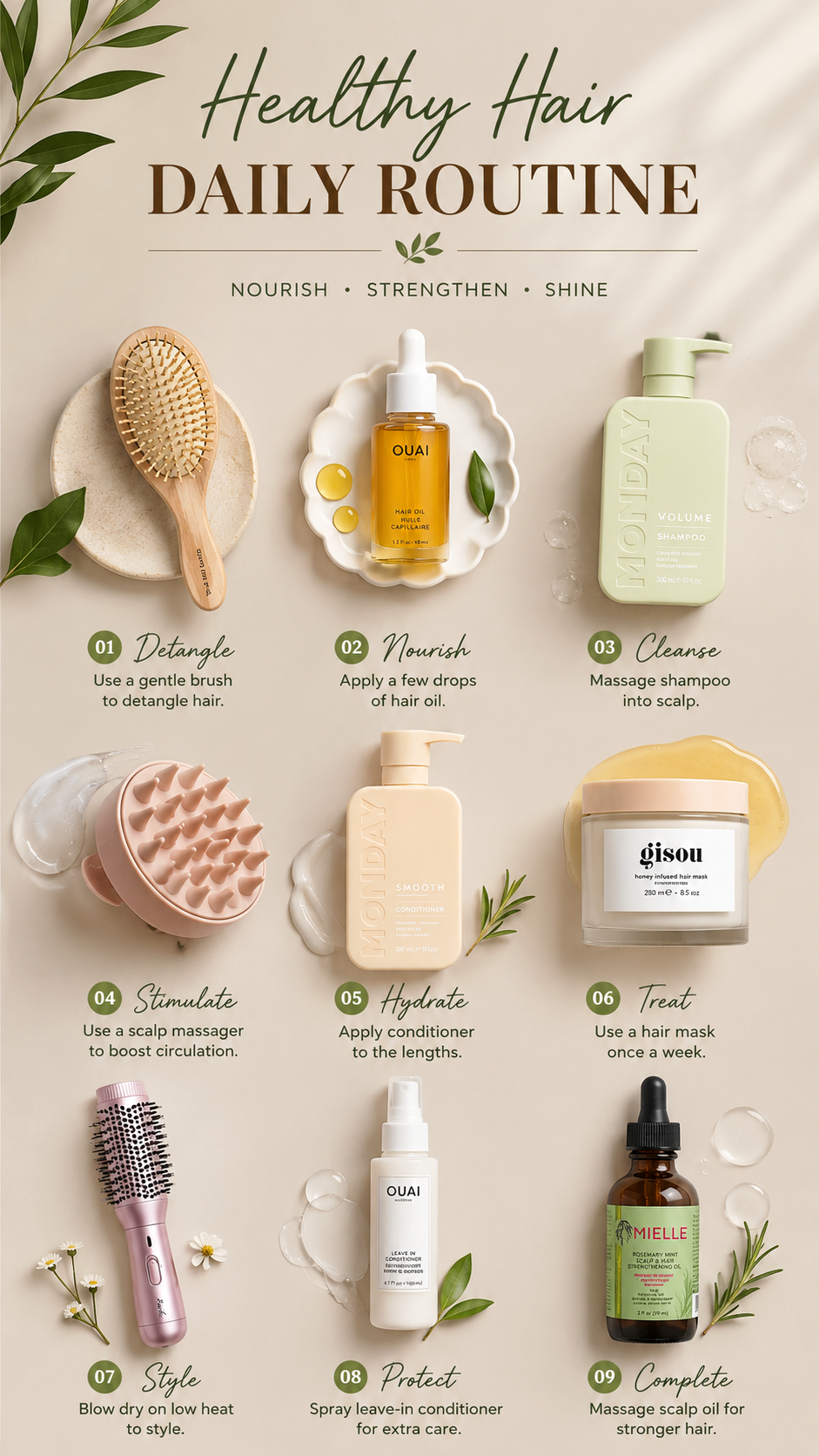
Hair Care Routine for Healthy Hair Growth Best Scalp Care Hair Products
Healthy hair starts with consistent care, smart product choices, and simple habits that support your scalp and strands every day. Building a hair care routine does not have to feel complicated. A balanced approach that includes cleansing, hydration, scalp care, and protective styling can help create softer, shinier, and healthier-looking hair over time.
Many people focus only on shampoo and conditioner, but a complete hair care routine often goes beyond basic washing. Hair oils, scalp treatments, masks, and proper brushing techniques can make a noticeable difference in how hair looks and feels. Creating a routine that works for your hair type can help improve manageability while supporting long-term hair health.
Key Takeaways
- Consistent hair care habits support healthier-looking hair.
- Scalp care plays an important role in overall hair wellness.
- Hydration products help improve softness and manageability.
- Hair masks and oils can support moisture retention.
- Protective styling and gentle tools help reduce damage.
Why a Complete Hair Care Routine Matters
Hair care routines are about creating healthy habits that support your scalp and hair over time. Hair experiences daily stress from weather, heat styling, friction, product buildup, and environmental factors. A thoughtful routine helps reduce unnecessary strain while maintaining moisture and strength.
Healthy-looking hair often begins with consistency. Using the right combination of cleansing products, moisturizing treatments, and scalp care tools creates a stronger foundation for better hair maintenance.
Important: Hair care is not about using the most products possible. Building a routine that matches your hair texture, scalp needs, and lifestyle often delivers better results than constantly changing products.
Step 1: Start with a Gentle Hair Brush
Brushing hair correctly supports scalp comfort and helps distribute natural oils throughout the strands. Choosing a gentle brush can help minimize pulling and reduce unnecessary breakage.
Benefits of Gentle Brushing
- Helps distribute scalp oils naturally
- Supports smoother styling
- Reduces tangles
- May minimize breakage caused by rough brushing
Start brushing from the ends and slowly work upward toward the roots. This method helps prevent excessive tension and makes detangling easier.
Step 2: Add Hair Oil for Moisture and Shine
Hair oils remain popular because they help support moisture retention while adding softness and shine. Lightweight oils can help smooth the appearance of dry or frizzy hair.
How to Use Hair Oil Effectively
- Apply a small amount to damp or dry hair.
- Focus on mid-lengths and ends.
- Avoid overapplying near the roots if your scalp gets oily.
- Adjust the amount depending on hair thickness.
Hair oils can work well before styling or as part of an overnight treatment routine.
Expert Insight
- Light oils often work best for fine hair.
- Richer oils may benefit thicker or drier textures.
- Consistency matters more than occasional treatments.
Step 3: Choose a Shampoo That Matches Your Hair Needs
Shampoo forms the foundation of a healthy hair routine. The goal is not simply cleaning hair but supporting scalp balance while removing buildup.
Finding the Right Shampoo
Different hair concerns may benefit from different shampoo formulas:
- Moisturizing shampoos for dry hair
- Clarifying formulas for product buildup
- Lightweight options for fine hair
- Scalp-focused shampoos for scalp maintenance
Washing frequency varies depending on hair texture, activity level, and personal preference.
Pro Tip: Concentrate shampoo primarily on the scalp rather than aggressively scrubbing the ends. Cleansing runoff usually provides enough cleaning for the rest of the hair.
Step 4: Support Scalp Health with Massage Tools
Scalp care continues growing in popularity because healthy-looking hair begins at the scalp level. Scalp massage tools offer a simple way to elevate hair washing routines.
Potential Benefits of Scalp Massage
- Helps distribute cleansing products
- Creates a relaxing self-care experience
- Supports gentle exfoliation
- Can help remove buildup more effectively
Gentle circular motions work best. Excessive pressure may create irritation rather than benefits.
Step 5: Never Skip Conditioner
Conditioner helps replenish moisture after cleansing. Skipping conditioner can leave hair feeling rough, tangled, or harder to style.
Conditioning Tips for Better Results
- Focus application on mid-lengths and ends
- Allow conditioner time to sit before rinsing
- Use a wider-tooth comb for even distribution
- Adjust richness based on your hair type
Hydrated hair often appears smoother and more manageable.
Important: Conditioner supports moisture balance and may improve hair manageability. Consistent conditioning becomes especially valuable for heat-styled, color-treated, or naturally dry hair.
Step 6: Add Hair Masks for Deep Moisture
Hair masks provide an extra layer of hydration beyond regular conditioning. Many people incorporate masks weekly or biweekly depending on hair needs.
When Hair Masks Can Help
- Dryness
- Heat styling stress
- Seasonal weather changes
- Hair that feels rough or less manageable
Following package directions matters because leaving treatments on too briefly or too long may not deliver the intended experience.
Step 7: Protect Hair During Blow Drying
Heat styling remains part of many beauty routines, but smart heat habits can help reduce stress on hair.
Healthier Blow Dry Practices
- Use moderate heat settings when possible
- Keep airflow moving instead of focusing on one spot
- Avoid styling soaking wet hair
- Use protective products before heat exposure
Modern styling tools often support smoother finishes while helping reduce styling time.
Step 8: Leave-In Conditioner for Daily Support
Leave-in conditioners help extend hydration between wash days. They can support detangling, softness, and improved styling control.
People with curly, textured, dry, or damaged hair often enjoy the extra moisture leave-in products provide.
Simple Leave-In Routine
- Apply to damp hair.
- Use a small amount first.
- Distribute evenly.
- Adjust based on hair thickness.
Step 9: Include Scalp Oils Thoughtfully
Scalp oils have become a popular addition to self-care routines. Many people enjoy scalp oils as part of massage rituals or overnight treatments.
Application methods vary depending on product instructions and scalp preferences. Moderation often matters because using too much product can lead to buildup.
Pro Tip: Building a consistent routine matters more than chasing quick fixes. Healthy hair habits practiced regularly often create the biggest long-term improvements.
Creating a Hair Routine That Fits Your Lifestyle
No single routine works for everyone. Hair texture, scalp needs, climate, and styling habits all influence what feels best.
Start simple. Focus on cleansing, hydration, scalp support, and gentle handling. Add specialty products slowly so you can better understand what works for your hair.
Quick Points
- Scalp care supports stronger hair routines.
- Hydration remains essential for healthy-looking strands.
- Gentle tools help reduce unnecessary stress.
- Hair masks and leave-ins add moisture support.
- Consistency often delivers the best results.
Conclusion
A complete hair care routine goes beyond shampoo alone. Combining cleansing, conditioning, scalp care, moisture treatments, and gentle styling habits creates a stronger foundation for healthier-looking hair.
Small improvements practiced consistently can transform how your hair feels and behaves over time. Whether you focus on hydration, scalp wellness, or styling protection, creating a balanced routine can help support long-term hair health while making your self-care routine more enjoyable.
Tags
Hair Care Routine Healthy Hair Scalp Care Hair Mask Hair Oil Leave In Conditioner Hair Wellness