
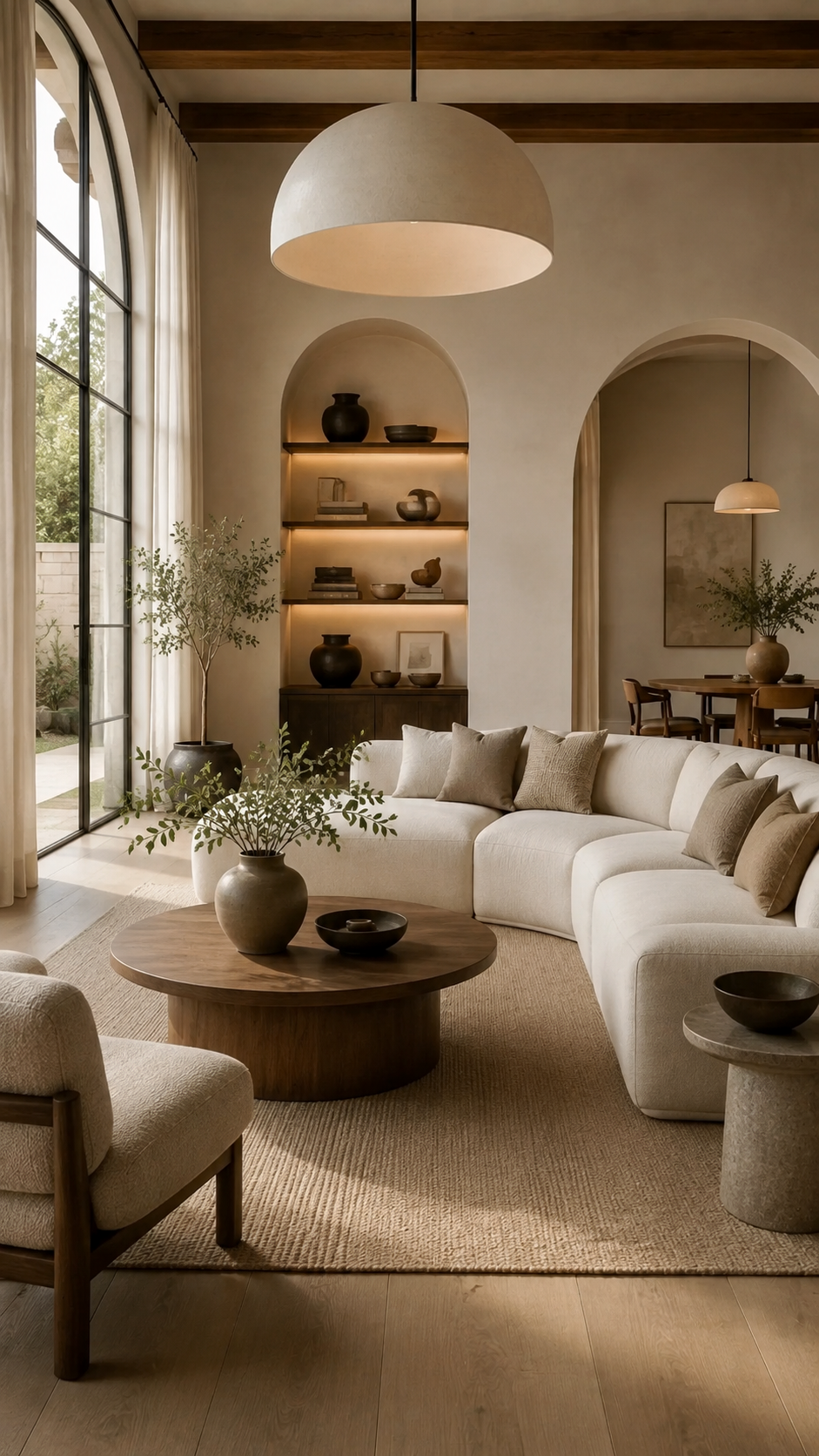
Modern Living Room Decor Ideas for a Warm, Elegant Home
A beautiful living room does not have to feel complicated to feel luxurious. This warm, neutral space brings together soft upholstery, natural textures, dark wood accents, sculptural furniture, and generous natural light to create a calm and sophisticated atmosphere. The result is an inviting room that feels refined without looking overly formal. If you are searching for warm neutral living room ideas, this style offers plenty of inspiration for creating a comfortable home with timeless character.
Key Takeaways
- Layer warm neutrals to create a relaxed and sophisticated living room.
- Combine cream upholstery with dark accents for balanced contrast.
- Use natural materials and organic shapes to soften modern interiors.
- Choose statement lighting that adds texture as well as illumination.
- Keep accessories simple so the room feels calm rather than crowded.
The Beauty of a Warm Neutral Living Room
The foundation of this interior is a restrained palette of beige, cream, taupe, warm brown, and soft black. Instead of relying on one flat neutral shade, the room uses several closely related tones to create depth. The walls have a gentle warm finish, the sofa adds creamy texture, and the large natural rug introduces another layer of earthy color.
This approach works particularly well in rooms with high ceilings and large windows because natural light can move across the different surfaces throughout the day. The changing light gives each material subtle variation, helping the room feel alive while maintaining a peaceful visual atmosphere.
Important: A neutral color palette does not mean everything needs to match perfectly. The most inviting rooms use variation in tone, texture, shape, and finish to create a layered look.
Why Cream and Beige Work So Well Together
Cream and beige are especially effective when you want a living room to feel comfortable and timeless. Cream upholstery keeps the seating area light, while beige flooring, rugs, and walls add warmth without introducing strong visual distractions. These shades also provide an excellent backdrop for darker furniture and decorative pieces.
For a cohesive look, consider using three or four variations of warm neutral rather than selecting a single color for every surface. Small differences between shades can make a surprisingly large impact.
Create Contrast With Dark Furniture
One of the strongest details in this living room is the contrast between the pale seating and the deep charcoal or black furniture. The round coffee table anchors the center of the room, while the dark cabinet at the back creates a visual focal point. Because the rest of the room is relatively light, these darker elements feel intentional rather than heavy.
Dark furniture can be especially useful in a neutral room because it prevents the space from appearing washed out. You do not need many black pieces. A coffee table, cabinet, lamp base, or small side table can be enough to introduce definition.
Choose Organic Shapes for a Softer Look
The furniture in this space demonstrates how curved silhouettes can make a contemporary interior feel more welcoming. The sofa has rounded edges, the coffee table features a soft circular profile, and the decorative objects echo those organic forms.
Rounded furniture is a useful design choice when a room contains strong architectural lines. It creates a gentle contrast and encourages the eye to move naturally around the space. If replacing major furniture is not practical, you can achieve a similar effect with rounded cushions, ceramic vessels, circular trays, or curved accent tables.
Expert Insight
When a room uses mostly neutral colors, texture becomes one of the main design tools. Mix woven fabrics, smooth ceramics, wood, stone-like finishes, linen-style curtains, and textured rugs to give the palette dimension without adding more colors.
Make Lighting Part of the Design
The oversized pendant light immediately draws attention in this room. Its layered circular shades and woven appearance add warmth while filling the generous vertical space above the seating area. Rather than treating lighting as an afterthought, this approach makes the fixture part of the room’s overall character.
A large room can often handle a larger light fixture than homeowners initially expect. In a space with a tall ceiling, an appropriately scaled pendant or chandelier can help visually connect the upper and lower parts of the room. Look for fixtures with natural fibers, fabric shades, aged finishes, or sculptural forms if you want to maintain a relaxed modern aesthetic.
Layer Ambient and Accent Lighting
The pendant is complemented by a table lamp positioned near the seating area. This combination creates flexibility. Overhead lighting can illuminate the larger room, while a nearby lamp can provide a softer glow when you want the space to feel more intimate.
For a polished living room, consider combining at least two or three lighting levels. Ceiling fixtures, floor or table lamps, and subtle accent lighting can each serve a different purpose. Warm-toned bulbs are particularly effective with beige and cream interiors because they enhance the cozy quality of the palette.
Bring Nature Indoors With Simple Greenery
A simple branch arrangement in a dark rounded vase adds a natural element without overwhelming the room. The organic shape of the branches contrasts beautifully with the straight lines of the artwork and cabinetry. This is an easy styling technique that can work in many neutral interiors.
You can recreate this effect with fresh branches, dried stems, leafy greenery, or understated arrangements. The goal is not to fill every surface with plants. One substantial arrangement can often have more impact than many small decorative pieces.
Use Decorative Objects With Intention
The console behind the sofa demonstrates the value of restrained styling. A few carefully selected objects, including vessels, candlestick-style accents, and a low bowl, create interest while leaving plenty of breathing room.
When styling shelves or consoles, try grouping objects in different heights. Combine a tall element with a medium-height piece and something low and horizontal. This creates a simple visual rhythm and keeps the arrangement from looking too uniform.
Add Texture Through Rugs and Upholstery
The large textured rug helps define the seating zone while adding softness underfoot. Its neutral color blends naturally with the surrounding furniture, but the visible texture prevents the floor from becoming visually flat.
Textured upholstery plays a similar role. The boucle or woven appearance of the seating creates a tactile quality that makes the room feel more comfortable. If you are decorating on a budget, focus on smaller textile additions such as textured cushions, throws, rugs, and curtains before replacing large furniture pieces.
Pro Tip: If your living room feels too plain after choosing neutral colors, do not immediately add more colors. First try adding texture through rugs, cushions, curtains, baskets, wood, ceramics, and woven accessories.
Style the Coffee Table Without Clutter
The coffee table is styled with just a few elements, allowing its sculptural shape to remain visible. A small vase, decorative bowl, books, and a candle create a balanced composition without covering the entire surface.
For an easy coffee table arrangement, begin with one central object and then add two or three smaller pieces. Vary the heights and shapes. Leaving some empty space is just as important as adding accessories, especially when you want a minimalist or modern living room aesthetic.
Create a Focal Point With Oversized Artwork
The large neutral artwork positioned behind the sofa gives the room a strong focal point without introducing a busy pattern. Its muted tones connect with the surrounding walls and furniture, helping the entire composition feel cohesive.
Oversized artwork is particularly effective in rooms with tall walls. Rather than filling a large vertical area with numerous small frames, one substantial piece can create a calmer and more sophisticated appearance. Abstract artwork, textured canvas, and tonal prints can all work well with a warm neutral palette.
How to Recreate This Look at Home
You do not need a large open-plan room to capture the same design feeling. The principles can be adapted to apartments, smaller family rooms, and contemporary homes. Start with the pieces that have the greatest visual impact, then gradually build the layers.
- Choose a warm neutral foundation. Begin with cream, beige, taupe, or soft brown as the dominant palette.
- Select comfortable seating. Look for softly rounded silhouettes and tactile upholstery.
- Add one or two dark accents. A black coffee table or dark cabinet can create useful contrast.
- Layer natural textures. Introduce woven rugs, linen-style fabrics, wood, ceramics, and organic materials.
- Install statement lighting. Choose a fixture that suits the ceiling height and complements the furniture.
- Finish with restrained accessories. Use greenery, artwork, books, bowls, and decorative vessels sparingly.
A Timeless Approach to Modern Comfort
What makes this style so appealing is its balance. The room feels modern because of its clean architecture and sculptural furniture, yet it remains warm because of the soft colors, tactile materials, natural details, and gentle lighting. Nothing feels overly decorated, but there is still enough variation to keep the space interesting.
This is a useful decorating direction if you want your living room to remain attractive for years rather than following a short-lived trend. Neutral foundations can easily evolve with seasonal accessories, new artwork, or small furniture changes, giving you flexibility without requiring a complete redesign.
At a Glance
- Warm neutral colors create a calm foundation.
- Dark accents add contrast and visual definition.
- Curved furniture brings softness to modern architecture.
- Natural textures make neutral interiors feel rich and layered.
- Simple accessories keep the overall look elegant and uncluttered.
Conclusion
A warm neutral living room can be both sophisticated and genuinely comfortable when every element has a purpose. Soft cream seating, earthy textures, sculptural dark furniture, natural greenery, oversized artwork, and statement lighting work together to create a space that feels peaceful yet visually distinctive.
If you are refreshing your own living room, focus on creating layers rather than trying to change everything at once. Start with a warm palette, introduce texture, add contrast with darker accents, and finish with a few meaningful decorative pieces. The result can be a timeless modern living room that feels welcoming every day and polished enough to inspire for years to come.
Tags
Warm Neutral Living Room Modern Living Room Neutral Home Decor Cozy Living Room Minimalist Home Organic Modern Decor Living Room Ideas Elegant Home Decor