Elegant Home Decor Ideas for a Warm and Timeless Living Space
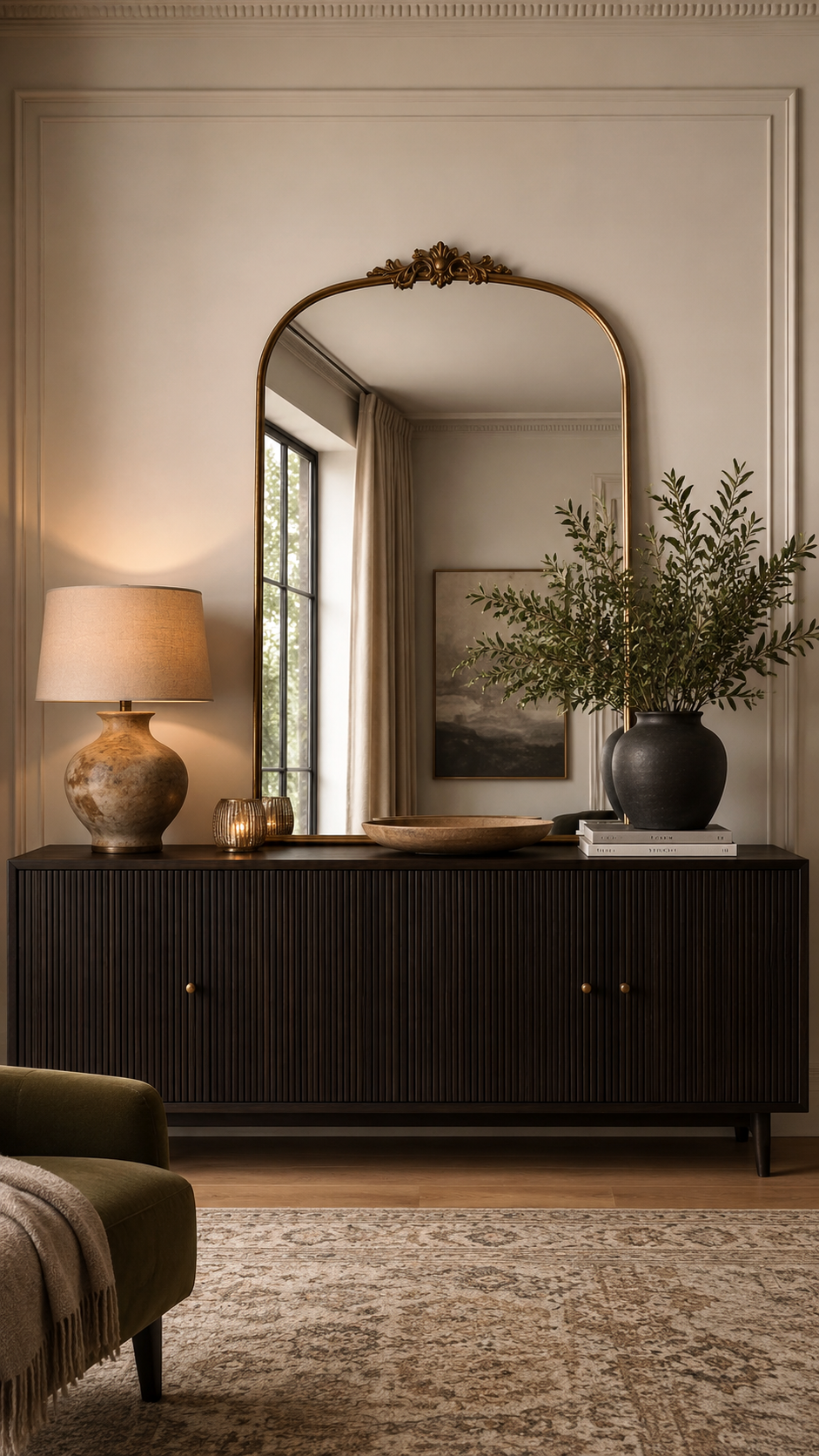
A beautiful home does not need to feel overly decorated to make an impression. This elegant interior shows how a few carefully chosen pieces can create a warm, timeless atmosphere with plenty of character. A rich wood sideboard, an ornate mirror, classic artwork, soft lighting, and deep burgundy botanical accents work together to create a space that feels sophisticated yet inviting. If you love traditional home decor with a relaxed modern touch, this look offers plenty of inspiration for creating a room that feels collected, comfortable, and personal.
Key Takeaways
- Use warm wood furniture to establish an inviting foundation.
- Choose an oversized mirror to add elegance and reflect natural light.
- Layer vintage-inspired artwork with simple decorative objects.
- Mix soft neutrals with deeper accent colors for visual depth.
- Use lamps and candles to create a warm, intimate atmosphere.
- Keep decorative arrangements balanced without making them feel too perfect.
Create a Warm and Timeless Home Decor Look
The room immediately draws attention through its combination of classic architectural details and warm furnishings. The softly painted wall provides a calm backdrop, while the dark wood sideboard introduces richness and texture. Instead of relying on bright colors or trendy finishes, the styling uses materials and shapes that can remain appealing for years.
This is one of the most useful principles in timeless interior design: begin with pieces that have visual weight and character, then add smaller accessories that support the overall mood. The result feels intentional without looking like everything came from the same furniture collection.
Important: A timeless room is usually built around a restrained palette, natural-looking materials, and a mixture of old-world and contemporary details. You do not need a large number of accessories. A few substantial pieces can have a much greater impact than a crowded arrangement.
Let Warm Wood Furniture Set the Foundation
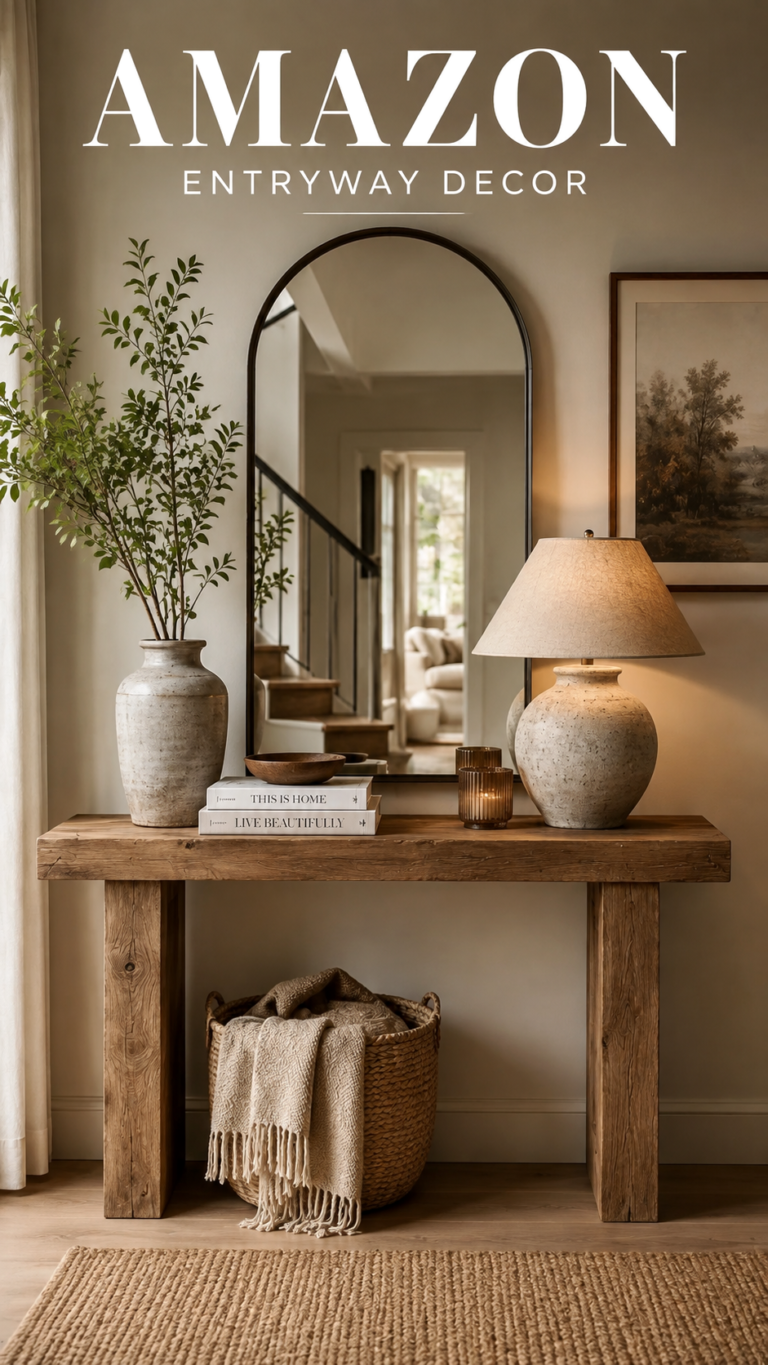
The wooden sideboard is the visual anchor of this space. Its deep brown finish brings warmth against the light wall, while the decorative door detailing adds architectural interest. Furniture like this works especially well in dining rooms, entryways, living rooms, and transitional spaces where you want storage to look like part of the decor.
When choosing wood furniture for a classic interior, consider pieces with visible grain, substantial proportions, and understated hardware. A natural or warm-stained finish can make a room feel grounded and welcoming. The goal is not necessarily to match every wooden item in the home, but to create enough repetition that the finishes feel connected.
How to Style a Wooden Sideboard
Start by treating the top of the sideboard as a display surface rather than filling every inch. Place one larger statement piece, such as a mirror or artwork, toward the back. Then introduce objects of different heights in front of it.
- Use a large mirror to create a strong vertical focal point.
- Add one framed artwork for a layered, collected appearance.
- Introduce a substantial vase or vessel on one side.
- Balance the opposite side with a lamp, candleholders, or another decorative object.
- Leave some open space so the arrangement can breathe.
Make an Ornate Mirror the Focal Point
The large decorative mirror above the sideboard adds an unmistakable touch of classic elegance. Its curved silhouette and detailed metallic frame contrast beautifully with the clean rectangular wall molding. This contrast is what keeps the room from feeling flat or overly formal.
A large mirror can also help a room feel more open by reflecting light and surrounding details. Positioning one opposite or near a window can make natural light more noticeable throughout the space. Even when the mirror is primarily decorative, its reflective surface contributes to the overall sense of depth.
Choose the Right Mirror Shape
Curved and arched mirrors are especially effective when a room contains many straight architectural lines. In this setting, the rounded mirror softens the wall panels and creates a graceful transition between the artwork and furniture below.
If your room already contains plenty of curves, a simpler rectangular mirror may provide better balance. Think about the shapes already present in the room before choosing a statement mirror.
Layer Classic Artwork for a Collected Feel
The framed landscape artwork placed in front of the mirror is a clever example of layering. Rather than hanging every piece directly on the wall, leaning artwork against a larger backdrop creates a relaxed, collected effect. This approach can make a room feel more personal and less formal.
A traditional landscape works particularly well with warm wood, aged-looking metallic finishes, and neutral walls because its muted tones naturally blend into the palette. When selecting artwork, look for colors that repeat elsewhere in the room rather than choosing a piece solely because it stands out.
Expert Insight
Layering works best when each object has a different scale, height, or texture. A large mirror can provide the backdrop, a medium-sized framed artwork can add personality, and smaller accessories can connect the two. This creates dimension without requiring dozens of decorative pieces.
Add Soft Lighting for an Inviting Atmosphere
Lighting plays a major role in the mood of a classic interior. The table lamp shown here has a softly textured shade and a substantial base, providing a gentle glow that complements the warm tones of the furniture.
For a cozy home decor scheme, avoid relying exclusively on one overhead fixture. Layer different light sources throughout the room. Table lamps, floor lamps, wall lights, and candlelight can each contribute a different level of warmth.
- Place a table lamp near a display or seating area.
- Use warm-toned bulbs for a softer evening atmosphere.
- Add candleholders as decorative accents when appropriate.
- Keep lighting at different heights to create visual depth.
Bring in Deep Burgundy Botanical Accents
One of the most striking details in this arrangement is the large botanical display in a rounded dark vessel. The deep burgundy color introduces contrast while still complementing the warm brown furniture and neutral walls.
You can recreate this effect with seasonal branches, dried botanicals, artificial stems, or fresh greenery. The important element is the scale. A generous arrangement can hold its own beside a large mirror and substantial furniture, while a smaller arrangement may disappear visually.
Pro Tip: If your room is dominated by neutral colors, introduce just one deeper accent shade through flowers, cushions, artwork, or decorative objects. Repeating that shade once or twice elsewhere can make the entire room feel more cohesive.
Use Neutral Walls to Highlight Decorative Details
The softly neutral wall provides the perfect backdrop for the darker furniture and decorative accessories. Wall paneling adds subtle architectural texture without competing with the furnishings. This is an excellent strategy for anyone who wants a sophisticated interior that does not depend on bold wallpaper or saturated wall colors.
Neutral does not have to mean plain. Cream, warm beige, taupe, soft stone, and muted greige tones can create a layered backdrop when paired with interesting textures and silhouettes. Architectural molding can add even more character while keeping the overall palette calm.
Balance Traditional and Modern Elements
The most appealing feature of this decorating approach is its balance. The ornate mirror and traditional landscape artwork bring old-world charm, while the clean-lined sideboard and simple ceramic bowl keep the arrangement from becoming overly formal.
This blend is often described as transitional or modern traditional decor. It allows you to enjoy classic details without creating a room that feels like a period display. The key is to mix decorative pieces with simpler contemporary forms.
A Simple Formula for Timeless Styling
If you are starting from scratch, use a simple formula: one statement piece, two or three supporting accessories, one natural element, and plenty of negative space. This gives you enough visual interest without making the surface feel cluttered.
- Statement piece: Choose a large mirror or artwork.
- Supporting pieces: Add lamps, candleholders, bowls, or framed art.
- Natural element: Include branches, flowers, greenery, or wood texture.
- Negative space: Leave areas intentionally empty for balance.
How to Recreate This Look at Home
You do not need identical furniture or accessories to achieve a similar feeling. Focus on the underlying design principles instead. Begin with a warm wooden console or sideboard. Above it, install or lean a large mirror with an interesting frame. Add a piece of classic artwork, then layer in lighting and natural textures.
Keep the background light and understated if you want the furniture and accessories to remain the stars. For color, consider muted shades such as burgundy, olive, brown, cream, or soft charcoal. These colors work particularly well with warm wood and traditional finishes.
Most importantly, decorate gradually. A timeless room often feels more authentic when pieces are collected over time rather than purchased as a complete matching set. Choose objects you genuinely enjoy and allow the arrangement to evolve.
At a Glance
- Warm wood creates a grounded foundation.
- An ornate mirror adds height, light, and character.
- Vintage-inspired artwork brings personality.
- Soft lighting makes the space feel welcoming.
- Deep botanical tones provide an elegant contrast.
Conclusion: Build a Home That Feels Collected and Inviting
Timeless home decor is less about following a strict style and more about creating harmony between furniture, color, texture, lighting, and personal details. This elegant arrangement demonstrates how warm wood, classic artwork, a statement mirror, soft illumination, and rich botanical accents can transform a simple wall into a sophisticated focal point.
Whether you are refreshing an entryway, styling a dining room, or looking for living room decor ideas, start with a few strong pieces and build around them. Keep the palette warm, mix traditional and modern shapes, and leave enough space for every detail to be appreciated. The result can be comfortable, refined, and welcoming without feeling overly staged.
The best interiors are the ones that feel like they belong to the people who live in them. Choose timeless foundations, add meaningful accents, and let your home develop its own character over time.
Tags
Timeless Home Decor Elegant Home Decor Classic Interior Design Warm Wood Decor Vintage Inspired Decor Console Table Styling Traditional Home Ideas Cozy Interior Ideas