Shrimp Recipes Fresh Easy Shrimp Spring Rolls
Fresh shrimp spring rolls are one of those meals that look impressive but are surprisingly simple to make. Crisp vegetables, tender shrimp, soft rice vermicelli, fresh herbs, and delicate rice paper come together for a light meal that feels colorful, satisfying, and refreshing. Served with a creamy, savory dipping sauce, these shrimp spring rolls are ideal for lunch, a light dinner, meal prep, or a beautiful appetizer platter.
Key Takeaways
- Fresh shrimp pair beautifully with crisp vegetables and soft rice noodles.
- Rice paper wrappers create a light, naturally gluten-free-style base when suitable ingredients are selected.
- Fresh mint and cilantro add brightness without making the rolls feel heavy.
- A simple hoisin-based dipping sauce brings savory, sweet, and tangy flavors together.
- These spring rolls are best enjoyed fresh while the vegetables remain crisp.
If you are looking for easy shrimp recipes that feel fresh rather than heavy, this combination is a wonderful place to start. The rolls require no complicated presentation techniques, and the filling can be prepared ahead of time so assembly is quick when you are ready to eat.
Why Shrimp Spring Rolls Make Such a Great Meal
Shrimp spring rolls bring together several textures in every bite. The shrimp provide a tender, satisfying centerpiece, while carrots and cucumber add crunch. Lettuce keeps the filling fresh and balanced, and cooked rice vermicelli adds enough substance to make the rolls feel like a complete meal.
Fresh herbs are another important part of the experience. Mint gives the rolls a cool, refreshing character, while cilantro contributes a distinctive herbal note. Together, these ingredients keep the overall flavor lively and prevent the combination from becoming too rich.
Important: The key to great shrimp spring rolls is balance. Keep the filling colorful and relatively compact so every bite contains shrimp, vegetables, noodles, and herbs rather than one ingredient dominating the roll.
Ingredients for Fresh Shrimp Spring Rolls
The ingredient list is straightforward, making this recipe especially useful when you want an easy lunch or dinner without a long shopping list. The visual appeal comes naturally from the different colors layered inside the translucent wrappers.
- Large shrimp: Cooked, peeled, and deveined shrimp form the main protein.
- Rice paper wrappers: These flexible wrappers become soft after a brief soak in warm water.
- Rice vermicelli: Cooked rice noodles add a delicate texture and make the rolls more filling.
- Carrots: Shredded carrots bring sweetness, color, and crunch.
- Cucumber: Julienne cucumber adds freshness and a crisp bite.
- Lettuce: Lettuce provides volume while keeping the filling light.
- Fresh mint: Mint adds a cooling herbal flavor.
- Fresh cilantro: Cilantro gives the rolls a bright, aromatic finish.
A Simple Dipping Sauce
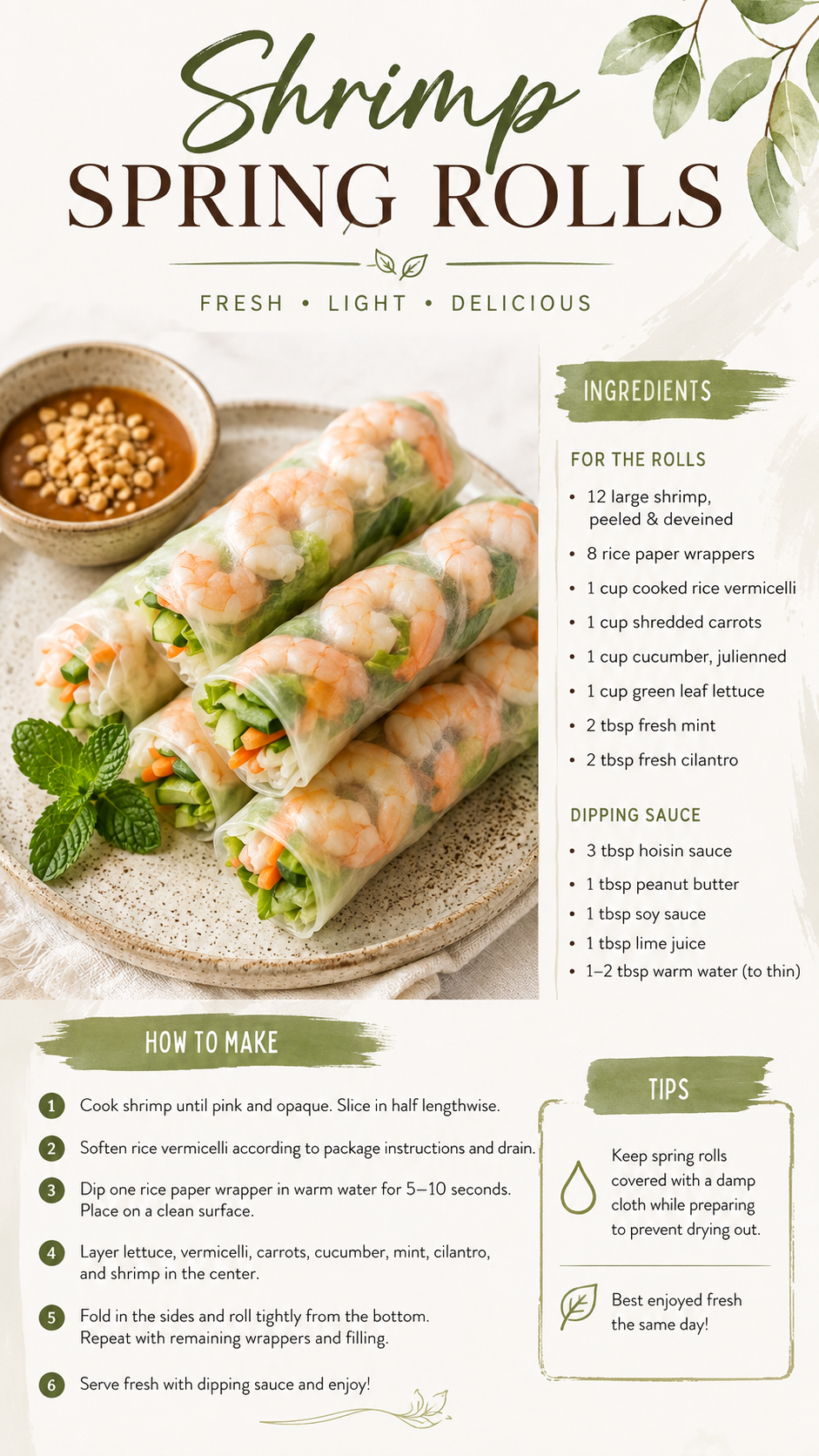
The dipping sauce shown alongside the rolls uses a simple combination of hoisin sauce, peanut butter, soy sauce, and lime juice. Warm water can be added gradually to loosen the mixture until it reaches a smooth, dippable consistency.
This sauce works particularly well because its savory and slightly sweet character complements the fresh vegetables and shrimp. The lime juice adds brightness, helping balance the richer ingredients in the dip.
How to Make Shrimp Spring Rolls
1. Prepare the Shrimp
Cook the shrimp until they are pink and opaque. Once cooked, allow them to cool enough to handle comfortably, then slice them lengthwise if needed. Cutting larger shrimp in half makes them easier to arrange inside the rice paper and helps create the attractive layered appearance of finished spring rolls.
2. Prepare the Vermicelli and Vegetables
Cook the rice vermicelli according to the package directions, then drain well. Prepare the carrots, cucumber, lettuce, mint, and cilantro before beginning assembly. Having everything ready within reach makes the rolling process much easier.
3. Soften the Rice Paper
Dip one rice paper wrapper into warm water for approximately 5 to 10 seconds. It should become flexible but does not need to be completely soft while it is in the water. Place it on a clean, flat surface and allow the remaining moisture to soften it as you work.
Pro Tip: Avoid soaking rice paper for too long. An overly soft wrapper can become sticky and difficult to handle. A wrapper that is just flexible enough to fold will become easier to roll as the filling is added.
4. Layer the Filling
Place shrimp, vermicelli, carrots, cucumber, lettuce, mint, and cilantro toward the center of the softened wrapper. Keep the filling organized and avoid overstuffing. A modest amount of filling makes it easier to fold the sides inward and create a neat roll.
5. Fold and Roll
Fold the sides of the wrapper toward the center, then begin rolling tightly from the bottom. Use gentle, even pressure as you roll so the filling stays together without tearing the rice paper. Continue with the remaining wrappers and ingredients.
6. Serve Fresh
Arrange the finished shrimp spring rolls on a serving plate and serve them with the dipping sauce. Their translucent wrappers make the colorful filling part of the presentation, so there is no need for an elaborate garnish.
Why Fresh Ingredients Matter
Unlike heavier cooked meals, spring rolls rely heavily on the natural texture of their ingredients. Crisp cucumber, fresh lettuce, carrots, and aromatic herbs create much of the appeal. Choosing fresh produce can make the difference between a spring roll that tastes vibrant and one that feels flat.
The shrimp should also be cooked just until done. Overcooked shrimp can become firm and dry, while properly cooked shrimp remain tender and pleasant alongside the crunchy vegetables.
Expert Insight
- Prepare every filling ingredient before soaking the first wrapper.
- Keep the filling compact rather than creating an oversized roll.
- Cover prepared wrappers with a slightly damp cloth while assembling to help prevent them from drying out.
Tips for Better Shrimp Spring Rolls
A little organization goes a long way when making rice paper rolls. Since the wrappers soften quickly, it is helpful to have the shrimp, vegetables, noodles, and herbs prepared before you begin. Set each ingredient close to your work surface so assembly moves smoothly.
- Do not overfill: Too much filling makes rolling difficult and can tear the wrapper.
- Keep wrappers covered: A damp cloth can help prevent unused or assembled wrappers from drying out.
- Use consistent cuts: Similar-sized vegetable pieces make the rolls easier to eat and help distribute textures evenly.
- Roll with gentle pressure: Firm enough to hold everything together, but not so tight that the wrapper breaks.
- Serve fresh: The combination is at its best when the vegetables are crisp and the wrapper is soft.
Easy Ways to Customize the Filling
One of the best things about shrimp spring rolls is how adaptable they are. The pictured combination creates a classic fresh and colorful profile, but you can adjust the proportions according to what you enjoy or have available.
For a vegetable-forward version, increase the amount of lettuce, cucumber, or carrots. If you prefer a more substantial roll, add a little extra vermicelli. Fresh herbs can also be adjusted to suit your taste, especially if you prefer a stronger mint or cilantro flavor.
The dipping sauce can be adapted as well. Add more lime juice for extra tang or a little more warm water if the sauce is too thick for dipping. The goal is a smooth sauce that coats the spring roll lightly without overpowering the fresh ingredients.
How to Serve Shrimp Spring Rolls
These shrimp spring rolls work beautifully as a light lunch, simple dinner, appetizer, or party dish. Place them on a large plate with the dipping sauce in the center so everyone can serve themselves.
They are especially appealing when served as part of a fresh meal alongside other crisp vegetables or simple side dishes. Because the rolls already contain shrimp, noodles, vegetables, and herbs, they can stand on their own as a satisfying light meal.
Storing and Preparing Ahead
Rice paper rolls are best when enjoyed fresh because the wrapper and vegetables can change texture over time. If you are preparing them ahead, keep them protected from dry air and avoid leaving them uncovered for extended periods.
For the easiest preparation, cook the shrimp and noodles and prepare the vegetables in advance, then assemble the spring rolls closer to serving time. This approach reduces last-minute work while preserving the fresh texture that makes these rolls so appealing.
At a Glance
- Fresh shrimp create the main protein component.
- Rice paper gives the rolls a light, delicate wrapper.
- Carrots and cucumber add crisp texture and color.
- Mint and cilantro provide fresh herbal flavor.
- Hoisin-peanut dipping sauce adds a savory finishing touch.
Conclusion: A Fresh Shrimp Recipe Worth Saving
Shrimp spring rolls are a simple way to turn fresh ingredients into a meal that looks beautiful and tastes even better. Tender shrimp, crisp vegetables, rice vermicelli, and fresh herbs create a satisfying combination of textures, while the flavorful dipping sauce brings everything together.
Whether you are searching for easy shrimp recipes, healthy lunch ideas, fresh dinner inspiration, or an attractive appetizer, these spring rolls are an excellent choice. Once the ingredients are prepared, assembly becomes quick and enjoyable, making this recipe easy to return to whenever you want something light, colorful, and full of fresh flavor.