Healthy Recipes Non-Toxic Kitchen Finds for Everyday Cooking
Creating healthier meals starts with more than choosing nutritious ingredients. The tools you use every day can also shape your cooking routine, from the pan on the stovetop to the utensils sitting beside it. A well-equipped kitchen can make simple meals easier to prepare while encouraging thoughtful choices about cookware, food preparation, and everyday materials.
Key Takeaways
- Choose durable cookware that suits your everyday cooking habits.
- Stainless steel can be a practical option for many home kitchens.
- Wooden utensils add a simple, natural touch to food preparation.
- Focus on balanced meals rather than complicated cooking routines.
- Look for kitchen products with clear material and care information.
- Build your collection gradually around the tools you actually use.
Why Your Kitchen Tools Matter for Healthy Cooking
When people think about healthy recipes, the conversation usually centers on vegetables, whole grains, lean proteins, fruit, and other nourishing ingredients. Those choices are important, but the cooking process deserves attention too. The cookware and utensils you reach for repeatedly should be practical, easy to maintain, and appropriate for the type of meals you prepare.
The kitchen scene here highlights a polished stovetop setup with a large metal pan, a glass lid, wooden utensils, and natural-looking storage pieces. The overall style is warm, simple, and functional. It reflects a growing interest in creating kitchens that feel less cluttered and more intentional.
Important: “Non-toxic” and “low-toxicity” are broad marketing terms rather than guarantees that a product is completely risk-free. A smarter approach is to check the actual materials, follow the manufacturer’s care instructions, and choose cookware from reputable sources.
Choosing Cookware for Everyday Healthy Recipes
A good everyday pan should make cooking easier rather than more complicated. The pan shown in the kitchen has a reflective metal cooking surface and a fitted glass lid, making it visually similar to cookware commonly chosen for sautéing, simmering, steaming, and one-pan meals.
For many households, versatility is more useful than owning a large collection of specialized cookware. One dependable skillet or sauté pan can handle vegetables, grains, eggs, chicken, fish, sauces, and countless simple recipes.
Look Beyond the Appearance
A shiny finish can make cookware look attractive, but appearance alone does not tell you everything about how a pan performs. When comparing kitchen products, pay attention to the stated construction, cooking surface, heat compatibility, handle design, lid quality, cleaning instructions, and overall durability.
Stainless steel cookware is often valued for its durability and versatility. It can be useful for browning ingredients, preparing sauces, sautéing vegetables, and cooking a wide range of everyday meals. Like any cookware, it works best when used according to the manufacturer’s instructions.
A Lid Can Make Simple Cooking Easier
The clear lid visible in the setup is another practical feature. Being able to see food while it cooks can help you monitor simmering, steaming, and moisture levels without repeatedly lifting the lid.
For healthy home cooking, that convenience can be especially useful when preparing vegetables, grains, soups, and one-pan meals. Instead of relying on complicated techniques, you can build flavorful meals with straightforward cooking methods and a few well-chosen ingredients.
Build a Lower-Toxicity Kitchen Without Overcomplicating It
Creating a more mindful kitchen does not mean replacing everything at once. In fact, a gradual approach is often more practical. Start with the pieces you use most frequently and evaluate them based on materials, condition, function, and care requirements.
- Identify your everyday cookware. Notice which pans and pots are used most often.
- Check product information. Review the manufacturer’s description and care instructions before buying.
- Replace damaged items thoughtfully. Excessively worn, cracked, or damaged cookware may be worth replacing.
- Choose versatile pieces. A dependable pan that performs several jobs can reduce unnecessary kitchen clutter.
- Maintain your cookware. Proper cleaning and storage can help preserve its condition and performance.
Why This Matters
The healthiest kitchen is not necessarily the one with the most products. A smaller collection of durable, useful tools can encourage more home cooking, reduce clutter, and make nutritious meals easier to prepare consistently.
Pair Better Cookware With Better Ingredients
Cookware is only one part of a healthy kitchen. The biggest opportunity comes from combining practical tools with simple, nutrient-focused ingredients. A versatile pan can become the foundation for dozens of balanced meals.
Start With Colorful Vegetables
Vegetables are an easy way to add color, texture, fiber, and variety to everyday meals. Try combining leafy greens with peppers, zucchini, broccoli, carrots, mushrooms, tomatoes, or seasonal vegetables.
A large sauté pan makes it convenient to cook several vegetables together. Add herbs, garlic, spices, or a simple dressing to build flavor without relying on an overly complicated recipe.
Add a Satisfying Protein
For a balanced meal, pair vegetables with a protein source that fits your preferences. Eggs, beans, lentils, poultry, fish, tofu, and other protein-rich foods can all work in simple skillet recipes.
One-pan cooking is particularly helpful on busy evenings. You can cook the main ingredients in the same pan, adjust seasoning as you go, and finish with fresh herbs or a squeeze of citrus.
Choose Smart Cooking Methods
Healthy cooking does not have to mean bland food. Sautéing, steaming, simmering, roasting, and gentle pan cooking can all produce flavorful meals. The goal is to use methods that match the ingredients and help you create meals you genuinely enjoy eating.
Pro Tip: Build meals around a simple formula: plenty of vegetables, a satisfying protein, a source of carbohydrates or whole grains when desired, and a flavorful finishing touch such as herbs, lemon, yogurt, or a light sauce.
Why Wooden Utensils Still Have a Place in the Kitchen
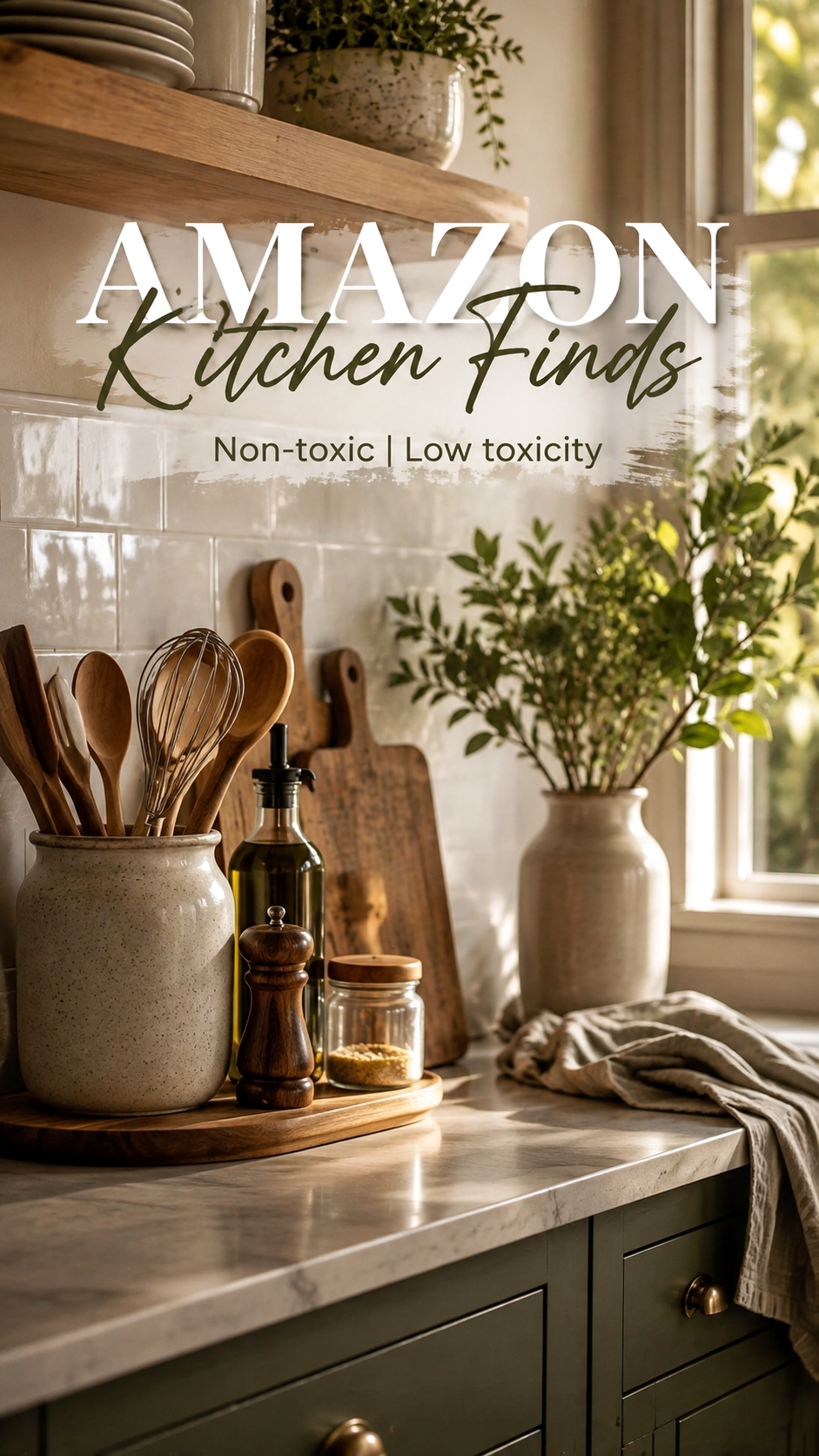
The wooden spoons and utensils in the background add warmth to the space, but they can also be genuinely useful cooking tools. Wooden utensils are comfortable to hold and can be handy for stirring sauces, mixing ingredients, folding vegetables, and preparing many stovetop dishes.
As with any kitchen material, proper care matters. Wooden utensils should be cleaned according to their care instructions and allowed to dry properly. Avoid keeping damaged or deeply cracked utensils in service, since they can become more difficult to clean effectively.
The larger lesson is that kitchen design and kitchen function do not have to compete. Simple materials, organized storage, and versatile tools can create a cooking environment that feels both beautiful and practical.
How to Shop for Health-Conscious Kitchen Finds
If you are searching for lower-toxicity kitchen products, resist the temptation to choose an item solely because the packaging uses terms such as natural, clean, healthy, or non-toxic. Instead, investigate what the product is actually made from and how it should be used.
- Read the complete material description.
- Check whether the cookware is compatible with your stovetop.
- Review maximum temperature and oven-use guidance.
- Look at cleaning and maintenance requirements.
- Consider whether the item replaces a tool you already own.
- Prioritize durability and practical everyday use.
It is also worth remembering that cookware safety depends on how an item is manufactured, used, cleaned, and maintained. No single material is automatically the perfect choice for every kitchen. The best purchase is one that fits your cooking style and comes with clear, reliable product information.
Simple Healthy Recipe Ideas for Your New Kitchen Setup
A versatile pan can become the starting point for a surprisingly large recipe collection. Keep a few dependable combinations in mind for busy days.
Vegetable and Grain Skillet
Sauté seasonal vegetables, then combine them with cooked brown rice, quinoa, or another grain. Finish with herbs, lemon juice, and a protein of your choice for an easy lunch or dinner.
Simple Herb Chicken and Vegetables
Cook seasoned chicken with colorful vegetables in a large pan, then add fresh herbs near the end. Serve with a whole grain or roasted potatoes for a satisfying meal.
Garlic Greens and Eggs
Quickly sauté leafy greens with garlic, then add eggs for a simple breakfast or light meal. Serve with whole-grain toast or fresh fruit for extra variety.
Keep Your Healthy Kitchen Simple
There is no need to fill every cabinet with specialty equipment. A thoughtful kitchen can be built around a handful of dependable tools that make everyday meals easier. A versatile pan, useful utensils, reliable cutting tools, storage containers, and a few basic cooking essentials can cover a tremendous range of recipes.
Organizing frequently used tools within easy reach can also make a difference. When healthy ingredients and practical cookware are readily available, preparing a meal at home becomes less of a chore and more of a natural part of the day.
Important: The goal of a health-conscious kitchen is not perfection. Focus on informed choices, good food habits, sensible cookware care, and tools that encourage you to prepare nourishing meals more often.
At a Glance
- Choose cookware based on materials, function, and care requirements.
- Use versatile pans for vegetables, proteins, grains, and one-pan meals.
- Keep wooden utensils clean, dry, and in good condition.
- Build a practical kitchen gradually instead of replacing everything at once.
- Let simple, wholesome ingredients remain the focus of healthy recipes.
Conclusion: Create a Kitchen That Supports Better Eating
A healthy kitchen is ultimately about creating an environment that makes good habits easier. Durable cookware, practical utensils, organized ingredients, and simple recipes can work together to make home cooking feel approachable and enjoyable.
The warm kitchen setup shown here captures that idea beautifully. A versatile pan on the stovetop, wooden utensils nearby, and a calm, uncluttered cooking space provide a useful foundation for everyday meals. Whether you are refreshing your cookware collection or simply looking for healthier recipe inspiration, start with the tools and ingredients you use most.
Choose products thoughtfully, care for them properly, and keep your recipes simple enough to make regularly. With a few dependable kitchen essentials and a focus on wholesome ingredients, healthy cooking can become a comfortable part of your everyday routine.